Has it been 20 years already!? On this day in 1991, the Supreme Soviet met and formally dissolved (stop existing) the USSR. The Cold War was over!

Has it been 20 years already!? On this day in 1991, the Supreme Soviet met and formally dissolved (stop existing) the USSR. The Cold War was over!

Slide your cursor over the words in bold to find their French translation.
Taken from : http://www.bonfirenight.net/index.php
In 1605, thirteen young men planned to blow up
the Houses of Parliament. Among them was
Guy Fawkes, Britain's most notorious traitor.
After Queen Elizabeth I died in 1603, English Catholics who had been persecuted under her rule had hoped that her successor, James I, would be more tolerant of their religion. James I had, after all, had a Catholic mother. Unfortunately, James did not turn out to be more tolerant than Elizabeth and a number of young men, 13 to be exact, decided that violent action was the answer.
A small group took shape, under the leadership of Robert Catesby. Catesby felt that violent action was warranted. Indeed, the thing to do was to blow up the Houses of Parliament. In doing so, they would kill the King, maybe even the Prince of Wales, and the Members of Parliament who were making life difficult for the Catholics. Today these conspirators would be known as extremists, or terrorists.
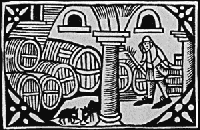 To carry out their plan, the conspirators got hold of 36 barrels of gunpowder - and stored them in a cellar, just under the House of Lords.
But as the group worked on the plot , it became clear that innocent people would be hurt or killed in the attack, including some people who even fought for more rights for Catholics. Some of the plotters started having second thoughts. One of the group members even sent an anonymous letter warning his friend, Lord Monteagle, to stay away from the Parliament on November 5th. Was the letter real?
The warning letter reached the King, and the King's forces made plans to stop the conspirators.
Guy Fawkes, who was in the cellar of the parliament with the 36 barrels of gunpowder when the authorities stormed it in the early hours of November 5th, was caught, tortured and executed.
It's unclear if the conspirators would ever have been able to pull off their plan to blow up the Parliament even if they had not been betrayed. Some have suggested that the gunpowder itself was so old as to be useless. Since Guy Fawkes and the other conspirators got caught before trying to ignite the powder, we'll never know for certain.
Even for the period which was notoriously unstable, the Gunpowder Plot struck a very profound chord for the people of England. In fact, even today, the reigning monarch only enters the Parliament once a year, on what is called "the State Opening of Parliament". Prior to the Opening, and according to custom, the Yeomen of the Guard search the cellars of the Palace of Westminster. Nowadays, the Queen and Parliament still observe this tradition.
On the very night that the Gunpowder Plot was foiled, on November 5th, 1605, bonfires were set alight to celebrate the safety of the King. Since then, November 5th has become known as Bonfire Night. The event is commemorated every year with fireworks and burning effigies of Guy Fawkes on a bonfire.
Some of the English have been known to wonder, in a tongue in cheek kind of way, whether they are celebrating Fawkes' execution or honoring his attempt to do away with the government.
For 400 years, bonfires have burned
on November 5th to mark the failed Gunpowder Plot.
The tradition of Guy Fawkes-related bonfires actually began the very same year as the failed coup. The Plot was foiled in the night between the 4th and 5th of November 1605. Already on the 5th, agitated Londoners who knew little more than that their King had been saved, joyfully lit bonfires in thanksgiving. As years progressed, however, the ritual became more elaborate.
Soon, people began placing effigies onto bonfires, and fireworks were added to the celebrations. Effigies of Guy Fawkes, and sometimes those of the Pope, graced the pyres. Still today, some communities throw dummies of both Guy Fawkes and the Pope on the bonfire (and even those of a contemporary politician or two), although the gesture is seen by most as a quirky tradition, rather than an expression of hostility towards the Pope.
Preparations for Bonfire Night celebrations include making a dummy of Guy Fawkes, which is called "the Guy". Some children even keep up an old tradition of walking in the streets, carrying "the Guy" they have just made, and beg passersby for "a penny for the Guy." The kids use the money to buy fireworks for the evening festivities.
 On the night itself, Guy is placed on top of the bonfire, which is then set alight; and fireworks displays fill the sky.
The extent of the celebrations and the size of the bonfire varies from one community to the next. Lewes, in the South East of England, is famous for its Bonfire Night festivities and consistently attracts thousands of people each year to participate.
Bonfire Night is not only celebrated in Britain. The tradition crossed the oceans and established itself in the British colonies during the centuries. It was actively celebrated in New England as "Pope Day" as late as the 18th century. Today, November 5th bonfires still light up in far out places like New Zealand and Newfoundland in Canada.
Taken from : http://www.bonfirenight.net/index.php
Contributed by Jane Ryder.
To watch a video from the BBC on Guy Fawkes and the Gunpowder Plot, go HERE:

On this day in 1831, James Abram Garfield was born in Moreland Hills, Ohio. He would become the 20th President of the United States and would have the second shortest presidency in the history of the country with only 199 days in office.
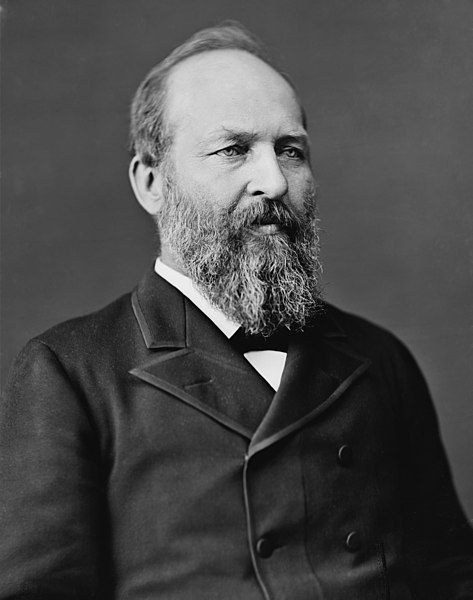 James A. Garfield was a major general in the US Army during the Civil War and later became a member of the US House of Representatives. In fact, Garfield is the only sitting member of the House to have been elected President of the United States.
Garfield’s life was changed at the Republican National Convention of 1880. Just before, in January of that year, Garfield had been elected by the Ohio legislature to become US Senator for the state of Ohio starting in March of 1881. Senator-elect Garfield went to the convention supporting Secretary of the Treasury John Sherman for the Republican nomination. In all, there were 14 nominations for the party’s nomination (this predates the modern primary system). The top three candidates were former President Ulysses S. Grant, James G. Blaine and John Sherman. Grant, who was president from 1869 to 1877 was seeking a third term in office.
After 35 ballots, none of the candidates obtained the required number of votes to capture the party’s nomination. Sherman and Blaine along with their delegates decided to look elsewhere and threw their support to a ‘dark horse,’ James A. Garfield. In political terms, a dark horse is someone who is little known and rises to prominence, much like current President Barack Obama. On the 36 ballot, Garfield, who didn’t even go the Republican Convention seeking the nomination, was elected with 93 more votes than Grant. Finally, the convention chose Chester A. Arthur as Garfield’s vice presidential running mate ending the longest Republican Convention in history. Ironically, Sherman, whom Garfield went to the convention to support, was chosen to be the senator for Ohio in the place of Garfield.
In the general election of 1880, the Republican Garfield-Arthur ticket won 214 votes in the Electoral College against the Democratic Hancock-English ticket’s 155 votes. In the popular vote, Garfield and Arthur received only 1,898 more votes. The smallest popular vote majority in the history of US presidential elections. President Garfield and Vice President Arthur were sworn into office on March 4, 1881.
 On July 2, 1881 Garfield was on his way to deliver a speech and was shot twice while walking through a train station in Washington D.C. by Charles J. Guiteau who was disgruntled for not being able to obtain a federal post. One bullet only grazed the President’s arm and the other was believed to have lodged itself in the spine. Garfield survived but was bedridden in the White House as he became increasingly ill from infection. The doctors were unable to locate the bullet and Alexander Graham Bell, the inventor of the telephone, devised a metal detector to locate the bullet. Unfortunately the metal-framed bed in which the President lay caused the detector to not function correctly. Such beds were so rare, they had no idea that it was the cause of the metal detector’s deviation.
President Garfield’s infection worsened which weakened his heart. He had constant fevers and severe pains. On September 9, he was moved to the New Jersey shore hoping that the fresh air would help aid the President in his recovery. Unfortunately, on September 19, President Garfield suffered either a massive heart attack or an aneurysm due to blood poisoning and pneumonia from infection. Garfield became the second American president to have been assassinated after President Lincoln. On the same day, Vice President Chester A. Arthur was sworn in as the 21st President of the United States.
Other interesting facts about the 20th President of the United States (taken from Wikipedia) :
Read more about President James A. Garfield at:
http://en.wikipedia.org/wiki/James_Garfield
http://www.answers.com/topic/james-garfield
http://www.whitehouse.gov/about/presidents/jamesgarfield/

On this day in 1861, Jefferson Davis was elected President of the Confederate States of America. Here’s an extract taken from Wikipedia:
Jefferson Finis Davis (June 3, 1808 – December 6, 1889) was an American politician who served as President of the Confederate States of America for its entire history, 1861 to 1865, during the American Civil War.
A West Point graduate, Davis fought in the Mexican-American War as a colonel of a volunteer regiment, and was the United States Secretary of War under Franklin Pierce. Both before and after his time in the Pierce Administration, he served as a U.S. Senator from Mississippi. As a senator he argued against secession but believed each state was sovereign and had an unquestionable right to secede from the Union.
Davis resigned from the Senate in January 1861, after receiving word that Mississippi had seceded from the Union. The following month, he was provisionally appointed President of the Confederate States of America. He was elected to a six-year term that November. During his presidency, Davis was not able to find a strategy to defeat the more industrially developed Union.
After Davis was captured May 10, 1865, he was charged with treason, though not tried, and stripped of his eligibility to run for public office. This limitation was posthumously removed by order of Congress and President Jimmy Carter in 1978, 89 years after his death. While not disgraced, he was displaced in Southern affection after the war by its leading general, Robert E. Lee.
There are two important events in American history that took place on this day.
 On this day in 1787, the US Constitution was signed and adopted by the Constitutional Convention in Philadelphia after a long, hot summer of intense negotiations among the various state representatives. On March 4, 1789 the government under the new Constitution began operations. September 17 is an American federal observance known as Constitution Day. The holiday was created in 2004 and mandated that all publically funded educational institutions provide educational programming on the history of the US Constitution.
The Articles of Confederation and Perpetual Union (America’s first constitution) which had been drafted in 1777 and finally ratified in 1781 was the governing document since Independence but unfortunately, it was a very inefficient document. Under this document, Congress (there was only a legislative body and no president!) was powerless to enforce its decisions and was denied the power of taxation leaving the government and military short of funds. It also left Congress in a weakened position when it came to foreign policy and had no means to regulate commerce. Also, due to its inability to tax, Congress could not pay the debts it owed to countries like France and the Netherlands for their assistance in our struggle for independence from Britain.
In 1786, state representatives convened in Philadelphia to discuss changes to the Articles. However after much discussion and debate, it became clear that an entirely new constitution was need creating a federal system of government. Many states were completely against this idea fearing the loss of state sovereignty. After much debate, a document unlike any other governing document in the world had been born. A document guaranteeing a balance of power between state sovereignty and a central federal government. The wisdom of those delegates has left an enduring document and today the US Constitution is the shortest and oldest written constitution in the world, a document very much cherished by Americans.
In school, children memorize the preamble to the US Constitution which is the following:
“We the People of the United States, in Order to form a more perfect Union, establish Justice, ensure domestic Tranquility, provide for the common defence, promote the general Welfare, and secure the Blessings of Liberty to ourselves and our Posterity, do ordain and establish this Constitution for the United States of America.”
Here’s a funny video from the American sitcom, The Andy Griffith Show, where Deputy Barney Fife tries to recite the Preamble to the Constitution from memory!
 For those of you brave enough to read a good history book on how the US Constitution came into being, I very highly recommend the book The Summer of 1787: The Men Who Invented the Constitution by David O. Stewart (ISBN 978-0743286930)
This has become one of my favorite books in my library!!
Also on this day in 1814, Francis Scott Key finished his poem “The Defence of Fort McHenry” which would become the words for the United States national anthem “The Star-Spangled Banner.”
 The poem was written towards the end of the War of 1812 against the British. Key, along with American Colonel John Stuart Skinner, were guests aboard a British ship to discuss a prisoner exchange. However, the British were about to attack Baltimore and could not let Key and Skinner leave the ship before the attack since they knew the strength and position of the British ships. They could do nothing but helplessly witness the bombardment of Fort McHenry. In the morning, Key went out on deck to see if the fort had successfully resisted the attack. Through the smoke he saw that the American flag still waved over the fort! The Americans held!
This vision inspired Key to write a poem and he intended for the words to fit to the rhythm of John Stafford Smith’s song “To Anacreaon In Heaven,” a song from a gentlemen’s club! The melody with Key’s poem added became known as “The Star-Spangled Banner” and was widely popular throughout the United States. However, the song did not become the official anthem of the US until 1931 with a Congressional resolution signed by President Hoover. Before 1931, the United States never had an official anthem!
The flag that inspired Key can still be seen in the Smithsonian in Washington, D.C.
“The Defence of Fort McHenry” (The Star-Spangled Banner)
by Francis Scott Key
O! say can you see by the dawn's early light
What so proudly we hailed at the twilight's last gleaming?
Whose broad stripes and bright stars through the perilous fight,
O'er the ramparts we watched were so gallantly streaming?
And the rockets' red glare, the bombs bursting in air,
Gave proof through the night that our flag was still there.
O! say does that star-spangled banner yet wave
O'er the land of the free and the home of the brave?On the shore, dimly seen through the mists of the deep,
Where the foe's haughty host in dread silence reposes,
What is that which the breeze, o'er the towering steep,
As it fitfully blows, half conceals, half discloses?
Now it catches the gleam of the morning's first beam,
In full glory reflected now shines in the stream:
'Tis the star-spangled banner! Oh long may it wave
O'er the land of the free and the home of the brave.And where is that band who so vauntingly swore
That the havoc of war and the battle's confusion,
A home and a country should leave us no more!
Their blood has washed out their foul footsteps' pollution.
No refuge could save the hireling and slave
From the terror of flight, or the gloom of the grave:
And the star-spangled banner in triumph doth wave
O'er the land of the free and the home of the brave.O! thus be it ever, when freemen shall stand
Between their loved home and the war's desolation!
Blest with victory and peace, may the heav'n rescued land
Praise the Power that hath made and preserved us a nation.
Then conquer we must, when our cause it is just,
And this be our motto: 'In God is our trust.'
And the star-spangled banner in triumph shall wave
O'er the land of the free and the home of the brave!
 On this day in 1948, Marvin the Martian made his first appearance in Haredevil Hare, a cartoon with Bugs Bunny. Even though Marvin the Martian only appeared in five original cartoon shorts, he attracted a cult following and quickly became one of Loony Tune’s favorite characters. The likeness of Marvin the Martian even appears on two rovers sent to Mars – Spirit and Opportunity.
Chuck Jones created this character as an opposite personality to Yosemite Sam who Bugs Bunny was always able to outwit. Unlike Yosemite Sam, Marvin was soft-spoken and who had plans, that if carried out, would be very destructive. His look, which reminds us of a Roman soldier’s uniform, was fashioned after Mars, the Roman god of war. He was sometimes accompanied by his sidekick and pet dog, K-9 (a character designed after Disney’s Pluto). The name, Marvin the Martian, didn’t come about until many years later for the purposes of marketing Loony Tunes merchandise such as t-shirts, mugs, toys, etc.. In the original cartoons, he was never given a name though in the 1952 cartoon The Hasty Hare in which he was simply called Commander, Flying Saucer X-2.
‘Haredevil’ is a play on words for ‘daredevil.’ A hare is a type of rabbit. You can watch the cartoon at the end of this post! Here is the summary of the cartoon taken from Wikipedia:
Chosen to be the first rabbit shot into space, Bugs is literally dragged to the launching pad -- protesting in a panic "I got a wife and kids! Millions of kids!" -- but when the rocket is loaded with carrots, he becomes more cooperative. When he lands on the moon he finds an unnamed Martian (later known as Marvin) set to blow up planet Earth. Bugs luckily defeats the Martian but has a bit of a problem afterwards when he is unable to leave the moon, having blown it up and reduced it to a crescent (from which he, the Martian and the dog precariously hang) to thwart the Martian. When the technicians contact him, asking for a statement to the press, he says the last line ever spoken in a "pre-August 1948" cartoon: GET ME OUT OF HERE!

References: http://en.wikipedia.org/wiki/Marvin_the_Martian & http://en.wikipedia.org/wiki/Haredevil_Hare
 Visit an online Marvin the Martian fan site!!
Unofficial Marvin the Martian Homepage
Exactly thirty years ago, President Jimmy Carter gave his famous "Crisis of Confidence” speech, also know as the “Malaise” speech. At that time, the United States was also going through a major economic crisis which would also lead to Carter’s defeat for reelection to Ronald Reagan in 1980. Here in a short excerpt from that speech.
To read the entire speech, go to: http://www.usa-presidents.info/speeches/malaise.html
 On this day in 1940, Sir Winston Churchill gave one of three memorable speeches to the House of Commons during the Battle of France. These three speeches were of great inspiration to the British people. Here is transcript of the speech as given by the Churchill on this day:
We are in the preliminary stage of one of the greatest battles in history. That we are in action at many points — in Norway and in Holland —, that we have to be prepared in the Mediterranean. That the air battle is continuous, and that many preparations have to be made here at home.
I would say to the House as I said to those who have joined this government: I have nothing to offer but blood, toil, tears and sweat. We have before us an ordeal of the most grievous kind. We have before us many, many long months of struggle and of suffering.
You ask, what is our aim? I can answer in one word: Victory. Victory at all costs — Victory in spite of all terror — Victory, however long and hard the road may be, for without victory there is no survival.
VOCABULARY
| toil – le labeur, le travail |
| tears – des larmes |
| sweat – la sueur |
| ordeal – une épreuve |
| grievous – sérieux, dangereux, grave |
| struggle – une lutte |
| aim – le but |
| in spite of - malgré |
The Constitution of the United States was ratified by the states in June 1788. In February of the following year the new nation's Electoral College selected George Washington to be its first President. On April 16, 1789 Washington began the journey from his home at Mount Vernon to New York City, then the nation's capital, where he would be inaugurated. Washington was reluctant to leave the serenity of his home and uncertain about his new position. His journal entry for that day noted: 
"About 10 o'clock I bade adieu to Mount Vernon, to private life, and to domestic felicity, and with a mind oppressed with more anxious and painful sensations than I have words to express, set out for New York in company with Mr. Thompson, and Colonel Humphries, with the best dispositions to render service to my country in obedience to its call, but with less hope of answering its expectations."
His journey to New York City took seven days and was transformed into a triumphal procession by the crowds and local officials who greeted the new President along the way. Celebrations erupted at numerous towns along his route including Alexandria, Baltimore, Wilmington, Philadelphia and Trenton. Washington arrived at Elizabeth Town, NJ on April 23 where a ceremonial barge awaited to take him across the river to Manhattan.
Entrance into the City
Rudolph Von Dorsten was the Secretary of the Dutch Legation in New York City and describes Washington's entrance into the city:
"President George Washington made his entry into New York on Thursday, April 23d. On the previous day a barge left this city. The barge was built expressly by the citizens of New York, and was rowed by thirteen pilots, all dressed in white. A committee of three Senators and five Representatives on behalf of Congress, and three of the first officers on behalf of New York, went to Elizabethtown in New Jersey, to welcome the President, and to await his arrival there. His Excellency was also accompanied by some well-equipped sloops and by a multitude of small craft with citizens of New Jersey and New York on board.
A Spanish royal packet-boat, happening to be anchored at the entrance of the harbor, at sight of the barge, on board of which was the President, fired a signal-shot, whereupon that vessel was dressed at once with the flags of all nations. When the presidential barge passed, the Spanish vessel saluted his Excellency by firing thirteen guns, which was repeated by the Battery, and again thirteen guns were fired by the fort when the President landed.
His Excellency was received by Governor George Clinton, the mayor of the city and other officers, and, after a procession had formed, consisting of some companies of uniformed citizens and the merchants and other citizens of the city, the President walked with his escort and, Governor Clinton at his side, to the house prepared by Congress for his use."
Taking the Oath of Office
Washington remained at his New York residence for a week while the House and the Senate ironed out their differences over how the formal inauguration should be conducted. Finally, on April 30, Washington was escorted to Federal Hall on Wall Street and into the Senate Chamber. Washington, Vice President John Adams, the Senators and Representatives stepped out of the chamber onto a balcony overlooking the street filled with a cheering crowd. As there were as yet no Supreme Court Justices, the Oath of Office was administered by Chancellor Robert R. Livingstone - New York's highest ranking judge. After taking the oath, Washington and the others returned to the Senate Chamber where the new President gave a short speech.
 William Maclay was a farmer, a lawyer and one of Pennsylvania's Senators. He kept a diary of his experiences. We pick up his story as Washington arrives at the Senate Chamber:
"The President advanced between the Senate and Representatives, bowing to each. He was placed in the chair by the Vice-President; the Senate with their president on the right, the Speaker and the Representatives on his left. The Vice-President rose and addressed a short sentence to him. The import of it was that he should now take the oath of office as President. He seemed to have forgot half what he was to say, for he made a dead pause and stood for some time, to appearance, in a vacant mood. He finished with a formal bow, and the President was conducted out of the middle window into the gallery, and the oath was administered by the Chancellor. Notice that the business done was communicated to the crowd by proclamation, etc., who gave three cheers, and repeated it on the President bowing to them.
As the company returned into the Senate chamber, the President took the, chair and the Senators and Representatives, their seats. He rose, and all arose also, and addressed them. This great man was agitated and embarrassed more than ever he was by the leveled cannon or pointed musket. He trembled, and several times could scarce make out to read, though it must be supposed he had often read it before.
He put part of the fingers of his left hand into the side of what I think the tailors call the fail of the breeches (corresponding to the modern side-pocket), changing the paper into his left (right) hand. After some time he then did the same with some of the fingers of his right hand.
When he came to the words all the world, he made a flourish with his right hand, which left rather an ungainly impression. I sincerely, for my part, wished all set ceremony in the hands of the dancing-masters, and that this first of men had read off his address in the plainest manner, without ever taking his eyes from the paper, for I felt hurt that he was not first in everything.
He was dressed in deep brown, with metal buttons, with an eagle on them, white stockings, a. bag, and sword."
References:
Van Dorsten's account was first published in Clarence Bowen (ed.) The History of the Centennial Celebration of the Inauguration of George Washington as First President of the United States (1892) republished in Paul Angle (ed.) The American Reader (1958); Senator Maclay's account appears in Bowling, Kenneth, Helen Vent (eds.) The Diary of William Maclay (1988); Jackson, Donald (ed) The Diaries of George Washington (1976-1979); Schecter, Stephen L. and Richard Bernstein (eds.) Well Begun: Chronicles of the Early National Period (1989).
Taken directly from: http://www.nndb.com/people/404/000093125/
Queen Mary II
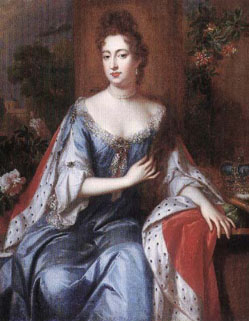 AKA Mary Stuart
Born: 30 April 1662
Birthplace: St. James's Palace, London, England
Died: 28 December 1694
Location of death: Kensington Palace, London, England
Cause of death: Illness
Remains: Buried, Westminster Abbey, London, England
Gender: Female
Religion: Anglican/Episcopalian
Race or Ethnicity: White
Sexual orientation: Straight
Occupation: Head of State, Royalty
Nationality: England
Executive summary: Queen of England 1689-94
Mary II, Queen of England and wife of King William III, elder daughter of James, Duke of York, afterwards King James II, by his first wife, Anne, daughter of Edward Hyde, 1st Earl of Clarendon, was born in London on the 30th of April 1662. She was educated as a Protestant, and as it was probable that she would succeed to the English throne after the deaths of her uncle, King Charles II, and her father, the choice of a husband for her was a political event of high importance. About 1672 the name of William, prince of Orange, was mentioned in this connection; and after some hesitation on both sides caused by the condition of European politics, the betrothal of William and Mary took place in October 1677, and was quickly followed by their marriage in London on the 4th of November.
Mary's married life in Holland does not appear to have been a happy one. Although she soon became popular among the Dutch, she remained childless, while William treated her with neglect and even with insult; and her troubles were not diminished after her father became King of England in 1685. James had treated his daughter very shabbily in money matters; and it was increasingly difficult for her to remain loyal to both father and husband when they were so divergent in character and policy. Although Mary never entirely lost her affection for her father the wife prevailed over the daughter; and after the birth of her half-brother, the Prince of Wales, in 1688, she regarded the dethronement of James as inevitable. It cannot be said, however, that William merited this confidence. Possibly he was jealous of his wife as the heiress of the English throne, contrasting her future position with his own; but according to Burnet, who was then staying at the Hague, this cause of difference was removed by the tactful interference of Burnet himself. The latter asserts that having divined the reason of the prince's jealousy he mentioned the matter to the princess, who in her ignorance of statecraft had never considered the relative positions of herself and her husband with regard to the English throne; and that Mary, by telling the prince she would be no more but his wife, and that she would do all that lay in her power to make him king for life (Burnet, Supplement, ed. Foxcroft, p. 309), probably mollified her husband's jealousy. On the other hand Macaulay's statement that henceforward there was "entire friendship and confidence" between them must be taken with some reserve. Mary shared heartily in the events which immediately preceded William's expedition to England in 1688. After the success of the undertaking she arrived in London in February 1689; and by her faithful adherence to her promise made a satisfactory settlement of the English crown possible. William and Mary were together proclaimed King and Queen of England, and afterwards of Scotland, and were crowned on the 11th of April 1689.
During the king's absence from England the queen, assisted by a committee of the privy council, was entrusted with the duties of government, duties which she performed faithfully, but which she gladly laid down on William's return. In these times of danger, however, she acted when necessary with courage and promptitude, as when in 1690 she directed the arrest of her uncle Henry Hyde, 2nd Earl of Clarendon; but she was constantly anxious for William's safety, and unable to trust many of her advisers. She was further distressed by a quarrel with her sister Anne in 1692 following the dismissal of Marlborough, and this event somewhat diminished her popularity, which had hitherto been one of the mainstays of the throne. Weak in body and troubled in mind, the queen died at Kensington Palace from smallpox on the 28th of December 1694, and was buried in Westminster Abbey.
Mary was a woman of a remarkably modest and retiring disposition, whose outstanding virtue was perhaps her unswerving loyalty to William. Burnet has passed a remarkable panegyric upon her character. She was extremely pious and charitable; her blameless private life was in marked contrast with her surroundings, both in England and Holland; without bigotry she was greatly attached to the Protestant faith and to the Church of England; and she was always eager to improve the tone of public morals, and to secure a better observance of Sunday. Greenwich Hospital for Seamen was founded in her honor.
Father: King James II
Mother: Lady Anne Hyde (d. 1671)
Sister: Queen Anne
Husband: King William III (King of England, m. 4-Nov-1677)
UK Monarch: 13 February 1689 to 28 December 1694

To learn more about President Thomas Jefferson clink on the links below:
Biography on the White House website
Monticello – Home of Thomas Jefferson
Thomas Jefferson National MemorialOn this day in 1917, 3 years before women received the right to vote in the United States, Jeannette Rankin was elected as the first woman to United States House of Representatives from the state of Montana. Here is a short video about it:
To learn more:
For vocabulary definitions from the text or video, go to 
On this day in 1867, under the urging of Secretary of State William Seward, the United States purchased from the Russian Empire the Alaskan territory. The Alaska Purchase was also know as Seward’s Folly or Seward’s Icebox because some thought it was quite foolish to spend so much money on a distant region. T
Tsar Alexander II decided to sale the territory due to severe financial problems within the Russian Empire and because he feared that they might lose the territory in a war without receiving any compensation for the loss. Russian relations with Britain were delicate and they had just fought the British in the Crimean War about 10 years earlier. Also, the population of British Columbia on the Alaskan border was increasing quickly and Russia feared that Alaska would be hard to defend if hostilities broke out again. Both Britain and the United States were approached as possible buyers, but in the end only the United States expressed an interest in the territory. Tsar Alexander II instructed his minister to the United States to open negotiations which began in the beginning of March 1867. After an all-night negotiation, the treaty was signed at 4 o’clock in the morning officially selling Alaska to the United States.
Even though public opinion was mostly favorable to the purchase, some newspaper criticized the purchase of this froze wilderness they saw as worthless and filled only with furbearing animals on the verge of extinction. Little did they know that in the long run, the value of the Alaskan territory would prove more valuable than the purchase price due to its rich natural resources and that Alaska would give a huge advantage to the United States during the Cold War.
Alaska would be admitted to the Union on January 3, 1959 as the 49th state of the United States making it the largest state geographically, but it is only ranked 47th in population. Interest in Alaska was revived worldwide during the 2008 US presidential campaign when Alaska’s Governor Sarah Palin was chosen as John McCain’s vice presidential running mate on the Republican ticket.
Photo: Secretary of State William Seward
To learn more, visit the following links.
Treaty with Russia for the Purchase of Alaska – background, history and documents
Treaty with Russia (Alaska Purchase) – the document

As an added bonus, here’s a video, which I subtitled, about the history of the Alaska Purchase:
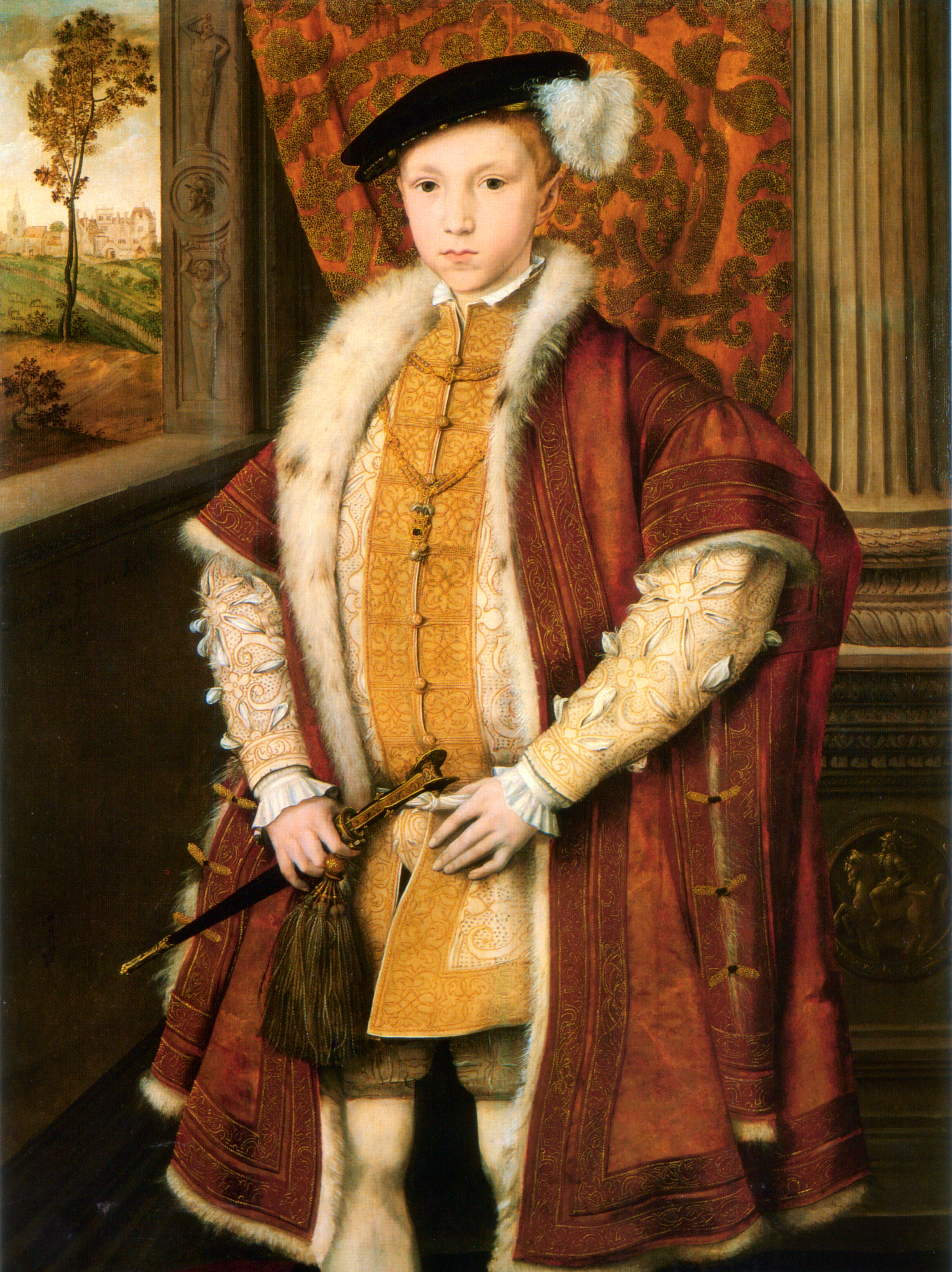 On this day in 1547, Edward VI ascended to the throne of England and Ireland as the third monarch of the Tudor dynasty. He reigned until 1553. He was the son of Henry VIII and his third wife, Jane Seymour. Because of Edward's youth, a protector advised the king on matters of government. The protector and the privy council were the real rulers during Edward's reign. The first protector was the king's uncle, Edward Seymour, duke of Somerset. He was driven from power in 1549 by the privy council and was later put to death. The second protector was the duke of Northumberland. He purged the Catholic influences from the doctrine of the Church of England and helped prepare a Book of Common Prayer to standardize the service.
Edward died of complications arising from tuberculosis. Northumberland persuaded the dying king to sign a will excluding his half-sisters Mary and Elizabeth from the succession and leaving the throne to his cousin, Lady Jane Grey (who was Northumberland's daughter-in-law). Parliament and the English people, however, supported Mary, and she became queen.
Learn more about Edward VI at Wikipedia.

adapted from www.history.com
 On this day in 1870, the requisite three-fourths of the states ratified the 15th Amendment, granting African-American men the right to vote. The amendment was formally adopted into the US Constitution on 30 March of the same year. Passed by Congress the year before, the amendment reads, "the right of citizens of the United States to vote shall not be denied or abridged by the United States or by any State on account of race, color, or previous condition of servitude." One day after it was adopted, Thomas Peterson-Mundy of Perth Amboy, New Jersey, became the first African American to vote under the authority of the 15th Amendment.
In 1867, the Republican-dominated Congress passed the First Reconstruction Act, over President Andrew Johnson's veto, dividing the South into five military districts and outlining how new governments based on universal manhood suffrage were to be established. With the adoption of the 15th Amendment in 1870, a politically mobilized African-American community joined with white allies in the Southern states to elect the Republican Party to power, which brought about radical changes across the South. By late 1870, all the former Confederate states had been readmitted to the Union, and most were controlled by the Republican Party, thanks to the support of African-American voters.
In the same year, Hiram Rhoades Revels, a Republican from Natchez, Mississippi, became the first African American ever to sit in Congress. Although African-American Republicans never obtained political office in proportion to their overwhelming electoral majority, Revels and a dozen other African-American men served in Congress during Reconstruction, more than 600 served in state legislatures, and many more held local offices. However, in the late 1870s, the Southern Republican Party vanished with the end of Reconstruction, and Southern state governments effectively nullified the 14th and 15th Amendments, stripping Southern African Americans of the right to vote. It would be nearly a century before the nation would again attempt to establish equal rights for African Americans in the South.
Learn more at http://15thamendment.harpweek.com/ and http://www.historicaldocuments.com/15thAmendment.htm
VOCABULARY
requisite – requis, exigé
granting – accordant
denied – refusé, rejeté
abridged – abrégé
on account of – à cause de
outlining – exposant
to bring about – provoquer, entraîner
readmitted – réadmis
overwhelming – massif
to hold office – être en exercice
to vanish – disparaître
effectively – efficacement; en fait, en réalité
to nullify – invalider, annuler
stripping – dépouillant

16th Amendment ratified
Unfortunately, this is also a dark day; in 1913, the Sixteenth Amendment to the US Constitution was ratified, authorizing the Federal government to impose and collect income tax!
The Congress shall have power to lay and collect taxes on incomes, from whatever source derived, without apportionment among the several States, and without regard to any census or enumeration.
Read more at http://sixteenthamendment.com/


Following the video below, I have included the poem with its French translation that you can print out.
THE RAVEN
Once upon a midnight dreary, while I pondered, weak and weary,
Over many a quaint and curious volume of forgotten lore,
While I nodded, nearly napping, suddenly there came a tapping,
As of some one gently rapping, rapping at my chamber door.
" 'Tis some visiter," I muttered, "tapping at my chamber door —
Only this, and nothing more."
Ah, distinctly I remember it was in the bleak December,
And each separate dying ember wrought its ghost upon the floor.
Eagerly I wished the morrow; — vainly I had tried to borrow
From my books surcease of sorrow — sorrow for the lost Lenore —
For the rare and radiant maiden whom the angels name Lenore —
Nameless here for evermore.
And the silken sad uncertain rustling of each purple curtain
Thrilled me — filled me with fantastic terrors never felt before;
So that now, to still the beating of my heart, I stood repeating
" 'Tis some visiter entreating entrance at my chamber door —
Some late visiter entreating entrance at my chamber door; —
This it is, and nothing more."
Presently my soul grew stronger; hesitating then no longer,
"Sir," said I, "or Madam, truly your forgiveness I implore;
But the fact is I was napping, and so gently you came rapping,
And so faintly you came tapping, tapping at my chamber door,
That I scarce was sure I heard you" — here I opened wide the door; ——
Darkness there, and nothing more.
Deep into that darkness peering, long I stood there wondering, fearing,
Doubting, dreaming dreams no mortal ever dared to dream before;
But the silence was unbroken, and the darkness gave no token,
And the only word there spoken was the whispered word, "Lenore!"
This I whispered, and an echo murmured back the word, "Lenore!"
Merely this, and nothing more.
Then into the chamber turning, all my soul within me burning,
Soon I heard again a tapping somewhat louder than before.
"Surely," said I, "surely that is something at my window lattice;
Let me see, then, what thereat is, and this mystery explore —
Let my heart be still a moment and this mystery explore;—
'Tis the wind, and nothing more!"
Open here I flung the shutter, when, with many a flirt and flutter,
In there stepped a stately raven of the saintly days of yore;
Not the least obeisance made he; not an instant stopped or stayed he;
But, with mien of lord or lady, perched above my chamber door —
Perched upon a bust of Pallas just above my chamber door —
Perched, and sat, and nothing more.
Then this ebony bird beguiling my sad fancy into smiling,
By the grave and stern decorum of the countenance it wore,
"Though thy crest be shorn and shaven, thou," I said, "art sure no craven,
Ghastly grim and ancient raven wandering from the Nightly shore —
Tell me what thy lordly name is on the Night's Plutonian shore!"
Quoth the raven, "Nevermore."
Much I marvelled this ungainly fowl to hear discourse so plainly,
Though its answer little meaning — little relevancy bore;
For we cannot help agreeing that no sublunary being
Ever yet was blessed with seeing bird above his chamber door —
Bird or beast upon the sculptured bust above his chamber door,
With such name as "Nevermore."
But the raven, sitting lonely on the placid bust, spoke only
That one word, as if his soul in that one word he did outpour.
Nothing farther then he uttered — not a feather then he fluttered —
Till I scarcely more than muttered, "Other friends have flown before —
On the morrow he will leave me, as my hopes have flown before."
Quoth the raven, "Nevermore."
Wondering at the stillness broken by reply so aptly spoken,
"Doubtless," said I, "what it utters is its only stock and store,
Caught from some unhappy master whom unmerciful Disaster
Followed fast and followed faster — so, when Hope he would adjure,
Stern Despair returned, instead of the sweet Hope he dared adjure —
That sad answer, "Nevermore!"
But the raven still beguiling all my sad soul into smiling,
Straight I wheeled a cushioned seat in front of bird, and bust and door;
Then upon the velvet sinking, I betook myself to linking
Fancy unto fancy, thinking what this ominous bird of yore —
What this grim, ungainly, ghastly, gaunt, and ominous bird of yore
Meant in croaking "Nevermore."
This I sat engaged in guessing, but no syllable expressing
To the fowl whose fiery eyes now burned into my bosom's core;
This and more I sat divining, with my head at ease reclining
On the cushion's velvet lining that the lamplight gloated o'er,
But whose velvet violet lining with the lamplight gloating o'er,
She shall press, ah, nevermore!
Then, methought, the air grew denser, perfumed from an unseen censer
Swung by angels whose faint foot-falls tinkled on the tufted floor.
"Wretch," I cried, "thy God hath lent thee — by these angels he hath sent thee
Respite — respite and Nepenthe from thy memories of Lenore!
Let me quaff this kind Nepenthe and forget this lost Lenore!"
Quoth the raven, "Nevermore."
"Prophet!" said I, "thing of evil! — prophet still, if bird or devil! —
Whether Tempter sent, or whether tempest tossed thee here ashore,
Desolate, yet all undaunted, on this desert land enchanted —
On this home by Horror haunted — tell me truly, I implore —
Is there — is there balm in Gilead? — tell me — tell me, I implore!"
Quoth the raven, "Nevermore."
"Prophet!" said I, "thing of evil! — prophet still, if bird or devil!
By that Heaven that bends above us — by that God we both adore —
Tell this soul with sorrow laden if, within the distant Aidenn,
It shall clasp a sainted maiden whom the angels name Lenore —
Clasp a rare and radiant maiden whom the angels name Lenore."
Quoth the raven, "Nevermore."
"Be that word our sign of parting, bird or fiend!" I shrieked, upstarting —
"Get thee back into the tempest and the Night's Plutonian shore!
Leave no black plume as a token of that lie thy soul hath spoken!
Leave my loneliness unbroken! — quit the bust above my door!
Take thy beak from out my heart, and take thy form from off my door!"
Quoth the raven, "Nevermore."
And the raven, never flitting, still is sitting, still is sitting
On the pallid bust of Pallas just above my chamber door;
And his eyes have all the seeming of a demon that is dreaming,
And the lamp-light o'er him streaming throws his shadow on the floor;
And my soul from out that shadow that lies floating on the floor
Shall be lifted — nevermore!
To learn more about the poem, visit its Wikipedia article HERE!
The Edgar Allen Poe National Historic Site, Pennsylvania
Poems by Edgar Allen Poe at Black Cat Poems
The House of Usher, Edgar Allen Poe fan site
The works Edgar Allen Poe from the Gutenberg Project

Here is a list (taken directly from Wikipedia) of Thomas Paine’s arguments why American should be independent of the British crown:
 It was ridiculous for an island to rule a continent.
 VOCABULARY pamphlet - un tract royalties - les droits d'auteur horrendous - épouvantable, dramatique to harm - faire du mal à quelqu'un to drag - traîner unwieldy - peu maniable haven - un refuge
Read Common Sense, 40-page pdf document.
Listen to Common Sense by Thomas Paine from American Phonic.
 On this day in 1773, in a major protest against British taxation without representation in Parliament. Colonists disguised as Mohawk Indians boarded a ship carrying crates of tea belonging the British East India Company and threw them into Boston Harbor. This event known as The Boston Tea Party was one of the most iconic events in American history and one of the major acts leading to the Revolutionary War.
VOCABULARY taxation - imposition to board - monter à bord crate - caisse, cageot to stir up - provoquer to misjudge - mal juger to resent - en avoir à trade - commerce to denounce - dénoncer targeted - ciblé shipment - cargaison delivery - livraison unloaded - déchargé stored - conservé destroyed - détruit showdown - confrontation failed - échoué to slip out - sortir discrètement anchored - ancré to dump - jeter chest - caisse town meeting - réunion communale banned - interdit, prohibé to strip - dépouiller trial - procès
Visit the site of the Boston Tea Party Historical Society to learn more!



