”The House of Representatives of the Fifty Third Congress” (detail), The Graphic Chicago, 1893, Collection of U.S. House of Representatives
Haldor Erickson Boen (January 2, 1851 – July 23, 1912) was an American congressman from Minnesota.
Haldor Erickson Boen was born in Sondre Aurdal, Valdres, a traditional district in Oppland county, Norway. Boen immigrated to the United States in 1868 and settled in Mower County, Minnesota. He attended the St. Cloud Normal School in 1869 and 1870. Boen relocated to Fergus Falls in Otter Tail County on January 1, 1871. In 1872 he was employed in the auditor’s office, computing the first taxes levied in Otter Tail County. He taught in the common schools of that county from 1874 to 1879. He acted as justice of the peace from 1875 – 1900. In 1880 he was elected county commissioner. He acted as register of deeds from 1888 – 1892.
Boen was elected as a Populist to the 53rd congress, representing the newly-created 7th congressional district, March 4, 1893 – March 3, 1895. He was unsuccessful in his reelection bid in 1894 to the 54th congress. Boen then became editor of the Fergus Falls Globe and resumed agricultural pursuits in Otter Tail County. He died in Aurdal Township in Otter Tail County and was interred in Aurdal Cemetery, near Fergus Falls, Minnesota. (Wikipedia)
In January when the new Republican-controlled Congress convenes, California Democrat Nancy Pelosi will no longer be Speaker of the House, the second most powerful position in the US government and second-in-line to the presidency. She appears to have enough votes though from her Democrat colleagues to maintain her leadership position, but as Minority Leader. However some of the more moderate Democrats are unhappy with her maintaining leadership of the Democrats in the House. Since they don’t have enough votes to remove her from leadership, they are attacking Pelosi’s power to appoint lieutenants.
If you appoint someone to do a job, you choose that person. Pelosi, as leader of the Democrats in the House, has the power to appoint the lieutenants. These are Democrat members holding other lower ranking leadership positions in the party and are considered the leader’s ‘enforcers.’
Nancy Pelosi is scrambling to stop opposition from the more moderate Democrat members. This means that she is hurrying and working very hard in competition against these member to maintain her authority. She wants to thwart a Democrat rebellion in her party. In other words, she is trying to prevent or stop this rebellion.
This is seen as the first test of her might (or power) in the new Congress. The article states that she is trying to extinguish the rebellion. If you extinguish a fire or a cigarette, you stop the burning. The rebellion is viewed like a fire that has to be stopped.
World War I – known at the time as “The Great War” - officially ended when the Treaty of Versailles was signed on June 28, 1919, in the Palace of Versailles outside the town of Versailles, France. However, fighting ceased seven months earlier when an armistice, or temporary cessation of hostilities, between the Allied nations and Germany went into effect on the eleventh hour of the eleventh day of the eleventh month. For that reason, November 11, 1918, is generally regarded as the end of “the war to end all wars.”
Soldiers of the 353rd Infantry near a church at Stenay, Meuse in France, wait for the end of hostilities. This photo was taken at 10:58 a.m., on November 11, 1918, two minutes before the armistice ending World War I went into effect
In November 1919, President Wilson proclaimed November 11 as the first commemoration of Armistice Day with the following words: "To us in America, the reflections of Armistice Day will be filled with solemn pride in the heroism of those who died in the country’s service and with gratitude for the victory, both because of the thing from which it has freed us and because of the opportunity it has given America to show her sympathy with peace and justice in the councils of the nations…"
The original concept for the celebration was for a day observed with parades and public meetings and a brief suspension of business beginning at 11:00 a.m.
The United States Congress officially recognized the end of World War I when it passed a concurrent resolution on June 4, 1926, with these words:
Whereas the 11th of November 1918, marked the cessation of the most destructive, sanguinary, and far reaching war in human annals and the resumption by the people of the United States of peaceful relations with other nations, which we hope may never again be severed, and
Whereas it is fitting that the recurring anniversary of this date should be commemorated with thanksgiving and prayer and exercises designed to perpetuate peace through good will and mutual understanding between nations; and
Whereas the legislatures of twenty-seven of our States have already declared November 11 to be a legal holiday: Therefore be it Resolved by the Senate (the House of Representatives concurring), that the President of the United States is requested to issue a proclamation calling upon the officials to display the flag of the United States on all Government buildings on November 11 and inviting the people of the United States to observe the day in schools and churches, or other suitable places, with appropriate ceremonies of friendly relations with all other peoples.
An Act (52 Stat. 351; 5 U. S. Code, Sec. 87a) approved May 13, 1938, made the 11th of November in each year a legal holiday—a day to be dedicated to the cause of world peace and to be thereafter celebrated and known as "Armistice Day." Armistice Day was primarily a day set aside to honor veterans of World War I, but in 1954, after World War II had required the greatest mobilization of soldiers, sailors, Marines and airmen in the Nation’s history; after American forces had fought aggression in Korea, the 83rd Congress, at the urging of the veterans service organizations, amended the Act of 1938 by striking out the word "Armistice" and inserting in its place the word "Veterans." With the approval of this legislation (Public Law 380) on June 1, 1954, November 11th became a day to honor American veterans of all wars.
Later that same year, on October 8th, President Dwight D. Eisenhower issued the first "Veterans Day Proclamation" which stated: "In order to insure proper and widespread observance of this anniversary, all veterans, all veterans' organizations, and the entire citizenry will wish to join hands in the common purpose. Toward this end, I am designating the Administrator of Veterans' Affairs as Chairman of a Veterans Day National Committee, which shall include such other persons as the Chairman may select, and which will coordinate at the national level necessary planning for the observance. I am also requesting the heads of all departments and agencies of the Executive branch of the Government to assist the National Committee in every way possible."
President Eisenhower signing HR7786, changing Armistice Day to Veterans Day. From left: Alvin J. King, Wayne Richards, Arthur J. Connell, John T. Nation, Edward Rees, Richard L. Trombla, Howard W. Watts
In 1958, the White House advised VA's General Counsel that the 1954 designation of the VA Administrator as Chairman of the Veterans Day National Committee applied to all subsequent VA Administrators. Since March 1989 when VA was elevated to a cabinet level department, the Secretary of Veterans Affairs has served as the committee's chairman.
The Uniform Holiday Bill (Public Law 90-363 (82 Stat. 250)) was signed on June 28, 1968, and was intended to ensure three-day weekends for Federal employees by celebrating four national holidays on Mondays: Washington's Birthday, Memorial Day, Veterans Day, and Columbus Day. It was thought that these extended weekends would encourage travel, recreational and cultural activities and stimulate greater industrial and commercial production. Many states did not agree with this decision and continued to celebrate the holidays on their original dates.
The first Veterans Day under the new law was observed with much confusion on October 25, 1971. It was quite apparent that the commemoration of this day was a matter of historic and patriotic significance to a great number of our citizens, and so on September 20th, 1975, President Gerald R. Ford signed Public Law 94-97 (89 Stat. 479), which returned the annual observance of Veterans Day to its original date of November 11, beginning in 1978. This action supported the desires of the overwhelming majority of state legislatures, all major veterans service organizations and the American people.
Veterans Day continues to be observed on November 11, regardless of what day of the week on which it falls. The restoration of the observance of Veterans Day to November 11 not only preserves the historical significance of the date, but helps focus attention on the important purpose of Veterans Day: A celebration to honor America's veterans for their patriotism, love of country, and willingness to serve and sacrifice for the common good.
This is a congressional district map of the United States since the 2008 elections. All the districts in blue have a Democratic representative and all those in red have a Republican representative. Before the election Tuesday, there were 255 Democratic seats, 178 Republican seats, and 2 vacant seats.
Here’s the new map for the House of Representatives starting in January 2011 when the new Congress is sworn in.
Here are the results as they stand now. The votes for two Senate seats (Washington and Alaska) are still being counted. There are 10 House seats being recounted because the races are very close.
Prior to Tuesday, there were 59 Democratic seats (including 2 Independent) and 41 Republican seats in the Senate.
Let’s look at some of the vocabulary found in the article titles. If you want to read each article on The Wall Street Journal webpage, click on the each title.
A swing is seat that hangs from ropes or chains and moves back and forth which is usually used by children. So you can imagine the illusion here of a swing. In politics, we this word to describe when one ruling party has been replaced by a new one. The term can be used to describe any change in emotion, idea, condition, etc, to another. For example, Spain was a very conservative and Catholic country but there was a swing away from traditional family values when the country allowed same-sex marriage. In Amsterdam, there is a swing in the government position on legalized marijuana which may cause coffee shops to close down in the future.
A change in political parties in power at a national level can also be described as a wave or even a tidal wave. A wave of course is a raised line of water you find in the ocean or other body of water. Last night a Republican waveswept (past irregular form of ‘to sweep’ – balayer) across the country pushing Democrats out of power.
The Majority Leader Harry Reid, despite the drubbing the Democrats received by the Republicans last night, surprisingly won his reelection in Nevada. If you received a drubbing, this means that you were severely beaten. This word is believed to have been possibly derived from the Arabic word darb which means a beating, particularly by a stick.
Voters who don’t identify themselves as Republicans or Democrats tiltedrightward in this election. In other words, they favored the particular program or opinion of those running as Republicans. Literally, to tilt means to incline or to cause to slope to one side. For example, these slashes ‘///////’ all tilt to the right. If these unaligned (or nonaligned) voters had favored the Democrats, we would have said that they tilted leftward. In any case, the election is over and the United States must now move forward and not backward.
The headline also said that these independent voters favored the political right in droves. If people do something in droves, it means they do it in very large numbers.
A rout is a term to describe the complete defeat of your opponent in a battle, competition or an election. The word is also a verb. For example, Spain won the FIFA World Cup after having routed the Netherlands.
If something happens in a timely manner, it happens at the most suitable or proper time.
On 2 November, Americans will vote in national midtermelections to elect the entire House of Representatives and one-third of the Senate. National elections take place every two years in the United States. This year’s elections are called midterm elections because they fall fall in the middle of a president’s 4-year term in office. This Election Day, all 435 seats of the House of Representatives, whose members only have a 2-year term, are up for election. In the Senate, one-third of Senate seats out of 100 are up for election. Members of that body have 6-year terms.
Currently there are 253 Democrat seats, 178 Republican seats and 6 empty seats in the House of Representatives. The Representative from California’s 8th congressional district, Nancy Pelosi is the current Speaker of the House. She is the 60th and first female to preside over the chamber. The Speaker of the House is probably the closest thing that the United States has to a prime minister. The Speaker is the second in line to the presidency after the Vice President and is in a leadership position of the majority party. He or she also works to set the political agenda for their party giving the Speaker a great deal of power. It is the second most powerful position in the US Government.
All polls in the US project a Republican sweep in the elections. This means that the party will pick up seats in a very large number retaking control of that chamber. The polls currently predict that the Republicans will win 212 seats with Democrats maintaining 183 seats. Forty seats are considered tossups. If pollsters say a seat is a tossup, they are indicating that they can’t predict which candidate will win because poll numbers are too close. If Republicans are swept into office in November, the current Minority LeaderJohn Boehner will probably become the 61st Speaker of the House. Mr. Boehner represents Ohio’s 8th congressional district. To be a member of the House, the Constitution requires that the representative to be a minimum of 25 years of age when he is sworn into office.
In the Senate, one-third of that body’s seats are up for election. There are currently 57 Democrats, 41 Republicans and 2 Independents who caucus with the Democrats. If a member caucuses with a certain party, this means they meet with and vote with that party. In effect, this gives the Democrats 59 seats but one vote short of an absolute majority of 60 votes. Sixty votes are need to stop a filibuster by the minority party and to proceed to a vote. In the Senate, there are no time limits to how long a senator may speak on the floor. To stop or delay a proposal known as a bill, a senator can filibuster till the end of debate. In other words, he talks the bill to death. The only way to stop a filibuster, is to have 60 senators willing to vote for cloture.
The Vice President of the United States is also the President of the Senate as written in the US Constitution. Vice President Joseph Biden is the current President. Today, modern vice presidents rarely preside over the Senate except for the swearing in of new members, joint sessions of Congress and to cast a tie-breaking (or “casting”) vote if there is a 50/50 vote. Other than this exception, the President of the Senate cannot vote nor participate in debate. In the absence of the vice president, the Senate chooses a president pro tempore to preside who is usually the highest-ranking senator. The President pro tempore is also third in line to the presidency after the Speaker of the House.
If polls hold true, Republicans will also gain seats in the Senate. The current projection is 49 Democrats, 46 Republican and 5 tossups. If the Senate is divided 50/50, then the President of the Senate’s party retains control. In this case, the Democrats would still have control but with neither party having a 60-seat, filibuster-proof majority. According to the Constitution, a senator must be a minimum of 30 years old when he takes office.
In these elections, Americans are not only voting for Congress, they are also going to the polls to vote for over a million different offices at the state and local level including governors, lieutenant governors, members of state assemblies, local and state judges, local education boards, sheriffs, etc…. Most states will also have referendums and state constitutional amendments on the ballot. Republicans are expected to hold the majority of governorships. Of the 50 states, polls predict 14 Democrat governors, 26 Republican and 10 seats are still a tossup.
This election has been described as an anti-incumbent election because many Americans are tired of the same old politics by what has come to be called the political establishment or the ruling class. This negative term is used to describe that elite group of politicians that have power or authority. In many cases, they have held elected position for a long time. An incumbent is the term used for any outgoing politician who is running for reelection. The anti-incumbent movement has not only targeted Democrats but has also targeted establishment Republicans, many of whom lost in state primaries to a more conservative Republican. If an incumbentis not running for reelection, then the candidates are running for an open seat.
Bean soup is on the menu in the Senate's restaurant every day. There are several stories about the origin of that mandate, but none has been corroborated.
According to one story, the Senate’s bean soup tradition began early in the 20th-century at the request of Senator Fred Dubois of Idaho. Another story attributes the request to Senator Knute Nelson of Minnesota, who expressed his fondness for the soup in 1903.
The recipe attributed to Dubois includes mashed potatoes and makes a 5-gallon batch. The recipe served in the Senate today does not include mashed potatoes, but does include a braised onion. Both Senate recipes are below.
The Famous Senate Restaurant Bean Soup Recipe
2 pounds dried navy beans
four quarts hot water
1 1/2 pounds smoked ham hocks
1 onion, chopped
2 tablespoons butter
salt and pepper to taste
Wash the navy beans and run hot water through them until they are slightly whitened. Place beans into pot with hot water. Add ham hocks and simmer approximately three hours in a covered pot, stirring occasionally. Remove ham hocks and set aside to cool. Dice meat and return to soup. Lightly brown the onion in butter. Add to soup. Before serving, bring to a boil and season with salt and pepper. Serves 8.
Bean Soup Recipe (for five gallons)
3 pounds dried navy beans
2 pounds of ham and a ham bone
1 quart mashed potatoes
5 onions, chopped
2 stalks of celery, chopped
four cloves garlic, chopped
half a bunch of parsley, chopped
Clean the beans, then cook them dry. Add ham, bone and water and bring to a boil. Add potatoes and mix thoroughly. Add chopped vegetables and bring to a boil. Simmer for one hour before serving.
Political cartoon by Henry Payne of The Detroit News in Michigan published on 17 September 2010.
RINO – This is an acronym for “Republican In Name Only.” This term is appearing a lot in the media in the United States and is being used by conservatives critical of Republicans who often support and vote for Democrat agenda. Many conservatives across the country believe it is time to throw out these RINOs and replace them with conservative Republicans. This movement is being led by the Tea Party.
Tea Party – The Tea Party, named after the famous Boston Tea Party of 1773, is a conservative grassroots movement that has become a major force in the current, political landscape in the United States. A grassroots movement is best described as movement by common, ordinary people who become politically involved at a local level in order to support a political idea or a politician. Usually, such a movement does not have a national political structure or leader. In this case, the Tea Party is a coalition of local and state Tea Parties united around a common cause: limited federal government. These activists believe that the federal government is violating the limits of its power and size as defined by the US Constitution. They are protesting out-of-control spending, high taxes and healthcare reform. They want a return to the founding principals as defined by the Founding Fathers.
Tea Party anger is not only aimed at President Obama and the Democrats in Congress, but it is also aimed at RINOs, also referred to as establishment Republicans because they have become part of the “ruling class.” In the primaries leading up to the national elections in November, many RINOs are loosing to more conservative Republicans who are endorsed by Tea Party activists.
An example of this can be found in Delaware, where in last week’s primary, Tea Party candidate Christine O’Donnell beat RINO Mike Castle to be her state's Republican nominee for Senate in November’s national elections. Ms. O’Donnell is the woman represented in the above cartoon.
By Randy Bish from The Tribune-Review from Pittsburg, Pennsylvania published on 24 July 2010
If you are under a lot of heavy pressure, you are feeling the heat. Here are some examples:
“Law makers in Congress are feeling the heat from constituents on border security.”
“My boss is expecting my report on his desk tomorrow morning and I have barely started it. I’m really feeling the heat.”
“Due to very low public opinion polls, Democrats are feeling the heat going into elections.”
“President Obama is feeling the heat from Afghanistan.”
“Antarctica is feeling the heat of climate change.”
Background of the cartoon : This cartoon is about Congressman Charles Rangel, a Democrat member of the House of Representatives from New York and the chairman of the very powerful House Ways and Means Committee. He was just charged with multiple ethic violations by the House Ethics Committee and will soon face a formal hearing to decide his fate. He could be prosecuted and face justice. Mr. Rangel is currently running for reelection which means he is really feeling the heat!
By Rick McKee from the Augusta Chronicle in Augusta, Georgia on 02 July 2010.
It is a sheer pleasure teaching English to someone who really wants to learn it! This adjective is used to give emphasis to a noun to give it a greater amount of degree. It has the meaning of ‘extreme.’
Later on, the caricature of Kagan asks Larry King, the interviewer, to grant her a point of personal privilege. If you grant something, like a request, you accord or allow them something.
‘A point of personal privilege’ is a very formal, parliamentary expression usually asked for when a member what to speak out to defend his personal rights, reputation or conduct.
Cartoon by Rob Rogers of The Pittsburg-Post Gazette in Pennsylvania and published on 16 June 2009.
In this cartoon, Mr. Rogers is commenting on the new landmark tobacco legislation that passed the Congress giving the Food and Drug Administration (FDA) for the first time major authority over the regulation of tobacco products. He is mocking the new tough position that Congress is taking while asserting that they have always been in bed with Big Tobacco.
1. to be in bed with – The meaning of this visual idiomatic expression is quite obvious. It means to be very closely involved with another person or group. It implies that intrigue is involved. In the cartoon, it refers to the large amounts of money given to the election campaigns of Congress members by tobacco companies with the hope of influencing said members in favor of the tobacco industry.
2. Big Tobacco – This is a pejorative term often used by those critical of the tobacco industry. Those using this expression are trying to assert that the tobacco industry’s lobbying and influential power in the government and the economy is too powerful. It is an attempt to portray the industry as menacing. This technique is also commonly used to describe other industries someone is being critical of. The other two commonly criticized industries are Big Oil and Big Pharma (for the pharmaceutical industry).
3. to get tough on – This expression is quite clear and often over used by politicians promising to get tough on crime or corruption for example. It simply means to become strict or severe with something.
The US Constitution provides for the removal from office of the president, vice president and other “officers” of the United States (e.g. federal judges, justices of the Supreme Court, etc.). The first step of removal is impeachment.
According to the US Constitution, article of impeachment must first be voted on by the House of Representatives. The sole power to impeach is given to the House and may only be done for “treason, bribery, or other high crimes and misdemeanors.” Once the House of Representatives votes and approves articles of impeachment, the accused is officially impeached. However, this is only the first step in removal from office.
Next, the US Senate, functioning like a court, tries the accused. Members of the House who represent the prosecution and present the charges in this trial are called “managers.” The senators function as the jury. The accused will be defended by his own lawyers. Before the senators deliberate, they must take an oath swearing to perform their duties honestly and with due diligence.
After hearing the charges, the Senate will deliberate in private and will vote to either convict or acquit. In order to convict and remove from office, a two-thirds majority is required. If convicted, the judgment is filed with the Secretary of State and the official is immediately removed from office.
During the impeachment process of a president, the US Constitution requires the Chief Justice of the United States (Supreme Court) to preside over the impeachment trial, however in the case of the vice president or other official, the Constitution is silent. In most cases, either the president pro tempore or vice president (constitutionally he is President of the Senate) will preside.
Only two presidents have been impeached: President Andrew Johnson in 1868 and President William Clinton in December of 1998. Both were acquitted and not removed from office.
Only 18 federal officials have been impeached in US history including the recently impeached Judge Samuel B. Kent. Before Kent, President Clinton was the last impeached official. For a complete list of federal officials impeached and results of impeachment, go to the link below.
Impeachment can also occur at a state level according to the rules laid out by the constitutions of the individual states. Governor Rod Blagojevich of Illinois was impeached on charges of corruption and misconduct by the Illinois House of Representatives on January 14, 2009 and the Illinois Senate voted unanimously on January 29, 2009 to remove the governor from office and to bar him from ever running for public office again in the state of Illinois.
On this day in 1917, 3 years before women received the right to vote in the United States, Jeannette Rankin was elected as the first woman to United States House of Representatives from the state of Montana. Here is a short video about it:





 Currently there are 253 Democrat seats, 178 Republican seats and 6 empty seats in the House of Representatives. The Representative from California’s 8th congressional district,
  In the Senate, one-third of that body’s seats are up for election. There are currently 57 Democrats, 41 Republicans and 2 Independents who caucus with the Democrats. If a member caucuses with a certain party, this means they meet with and vote with that party. In effect, this gives the Democrats 59 seats but one vote short of an absolute majority of 60 votes. Sixty votes are need to stop a filibuster by the minority party and to proceed to a vote. In the Senate, there are no time limits to how long a senator may speak on the floor. To stop or delay a proposal known as a bill, a senator can filibuster till the end of debate. In other words, he talks the bill to death. The only way to stop a filibuster, is to have 60 senators willing to vote for cloture.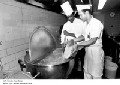
 RINO – This is an acronym for “Republican In Name Only.” This term is appearing a lot in the media in the United States and is being used by conservatives critical of Republicans who often support and vote for Democrat agenda. Many conservatives across the country believe it is time to throw out these RINOs and replace them with conservative Republicans. This movement is being led by the Tea Party.


