Showing posts with label Presidents' Day. Show all posts
Showing posts with label Presidents' Day. Show all posts
16 February 2009



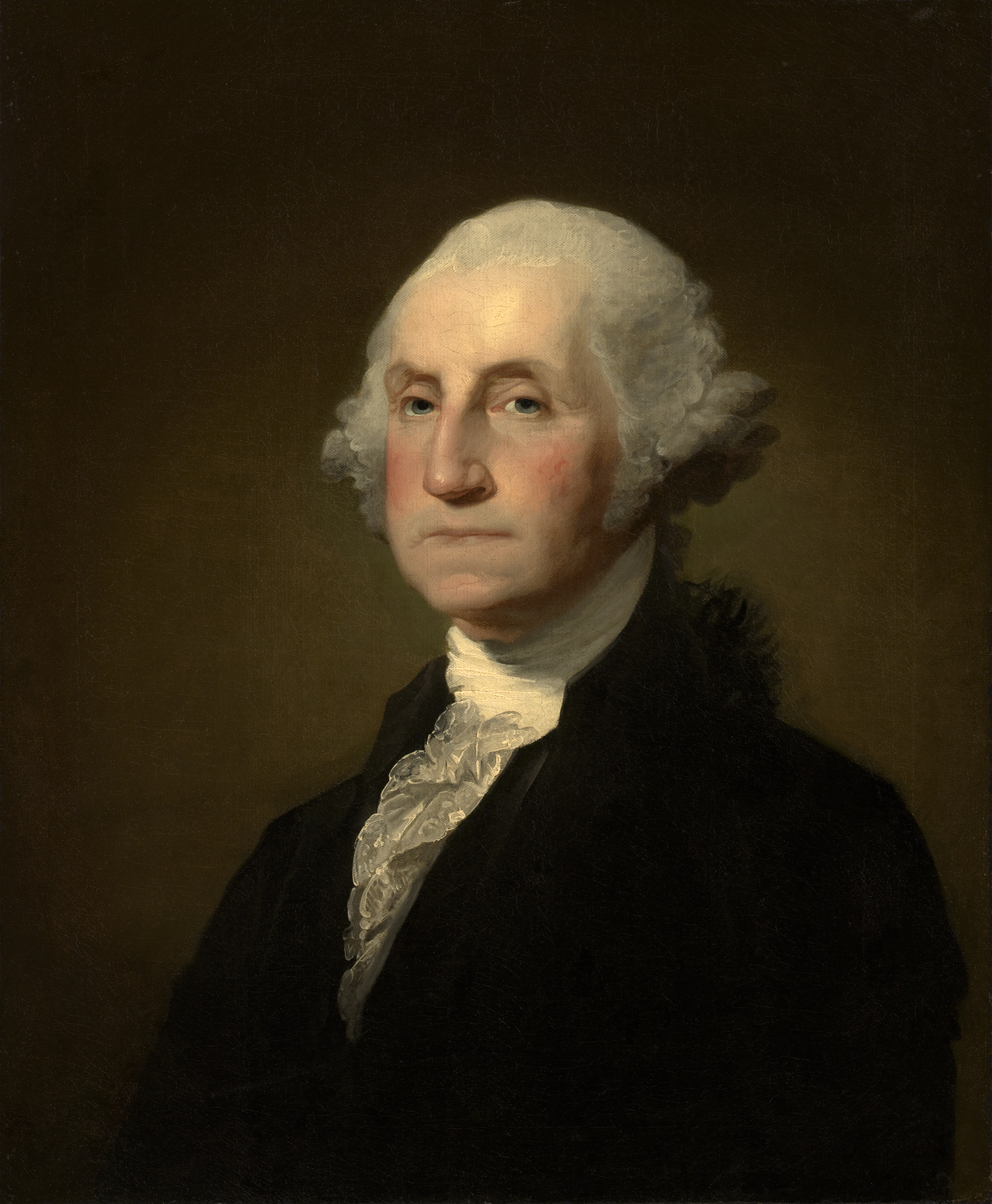
Culture Spot: Washington’s Birthday (Presidents’ Day)

Today, the third Monday of February is a federal holiday in the United States. Traditionally known as Washington’s Birthday, there was a movement in the 1980s to change the name to Presidents’ Day. The holiday was established in 1880 and celebrated on the actual date of the first president’s day of birth: 22 February. In 1971, the Uniform Monday Holiday Act, signed into law in 1968, went into effect moving several federal holidays to Mondays in order to create 3-day weekends for federal employees. A movement in the 1980s began to push a name change to Presidents’ Day in order to honor another great American president who was also born in February, Abraham Lincoln. Several of the States already recognized President Lincoln’s birthday, such his home state of Illinois. Other States such as Massachusetts had already changed the name of Washington’s Birthday to Presidents’ Day in order to honor all US presidents from that state: John Adams, John Quincy Adams, Calvin Coolidge and John F. Kennedy. In Virginia, this day is legally recognized as “George Washington Day.”
Even though the official name of this holiday is still “Washington’s Birthday,” it has commonly been called by many Americans as Presidents’ Day. Many schools around the country use the days preceding this holiday to educate students about all US presidents with emphasize on Washington and Lincoln.
To learn more about this US federal holiday, read the Wikipedia article Washington’s Birthday.
See also, Presidents’ Day or Washington’s Birthday?
Celebrate! Holidays in the USA (from the US embassy site in Sweden): George Washington’s Birthday
George Washington’s Birthday from the National Archives
Biography of George Washington at the White House website
George Washington’s Mount Vernon Estate and Gardens
Below is a video from the recent television miniseries, ‘John Adams,’ with an accurate representation of George Washington taking the oath of office as the first US President!
Also check out the History Channel’s video ‘Searching for George Washington’.
To His Excellency General Washington by Phyllis Wheatley
Celestial choir! enthron'd in realms of light,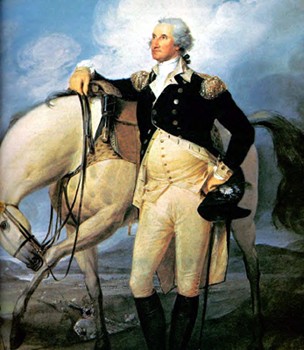
Columbia's scenes of glorious toils I write.
While freedom's cause her anxious breast alarms,
She flashes dreadful in refulgent arms.
See mother earth her offspring's fate bemoan,
And nations gaze at scenes before unknown!
See the bright beams of heaven's revolving light
Involved in sorrows and veil of night!
The goddess comes, she moves divinely fair,
Olive and laurel bind her golden hair:
Wherever shines this native of the skies,
Unnumber'd charms and recent graces rise.
Muse! bow propitious while my pen relates
How pour her armies through a thousand gates,
As when Eolus heaven's fair face deforms,
Enwrapp'd in tempest and a night of storms;
Astonish'd ocean feels the wild uproar,
The refluent surges beat the sounding shore;
Or thick as leaves in Autumn's golden reign,
Such, and so many, moves the warrior's train.
In bright array they seek the work of war,
Where high unfurl'd the ensign waves in air.
Shall I to Washington their praise recite?
Enough thou know'st them in the fields of fight.
Thee, first in peace and honours,—we demand
The grace and glory of thy martial band.
Fam'd for thy valour, for thy virtues more,
Hear every tongue thy guardian aid implore!
One century scarce perform'd its destined round,
When Gallic powers Columbia's fury found;
And so may you, whoever dares disgrace
The land of freedom's heaven-defended race!
Fix'd are the eyes of the nations on the scales,
For in their hopes Columbia's arm prevails.
Anon Britannia droops the pensive head,
While round increase the rising hills of dead.
Ah! cruel blindness to Columbia's state!
Lament thy thirst of boundless power too late.
Proceed, great chief, with virtue on thy side,40
Thy ev'ry action let the goddess guide.
A crown, a mansion, and a throne that shine,
With gold unfading, WASHINGTON! be thine.
This poem was written by a young slave girl from Boston, Phyllis Wheatley. You can learn more about her on Wednesday when there will be a post dedicated to the great African-American poet.
Phillis Wheatley’s poem “To His Excellency General Washington” is as unique as the poet herself. The poem was sent to George Washington, the newly appointed Commander-in-Chief of the Armies of North America, in October of 1775, well before American Independence was declared in 1776. Washington, as busy as he was with organizing the colonies to take on the British, sent a letter back to Wheatley thanking her for the poem and inviting her to visit him if she ever came to Cambridge, Massachusetts. The two did meet in March of 1776, seven years before the war was finished and true independence was declared. Washington was roundly lauded in poems and prose after the successful conclusion of the Revolutionary War in 1783, but Wheatley’s poem was written when the war’s outcome was very uncertain, the British being the obvious favorites to win. It can be said that Wheatley was the groundbreaker in beginning the Washington legend as the “father of our country,” yet she stands as a groundbreaker in even more important ways. In 1773, two years before this poem was written, Phillis Wheatley, a twenty-year-old slave, published her collection of poems entitled Poems on Various Subjects, Religious and Moral, the first book of poetry published by an African American, and only the second book by a woman in what would become the United States. Considering that Ms. Wheatley was bought at a slave auction in 1761, not able to read or write and incapable of speaking English, her book of poems is truly astounding. She was revered in many countries. Benjamin Franklin offered his services to her, as did many other high-ranking men in America. In April of 1776, the author and political philosopher Thomas Paine published Wheatley’s poem to Washington in The Pennsylvania Magazine. The central theme of this poem is “freedom’s cause,” the colonies’ struggle for freedom from England, which General Washington was assigned to lead. Like many other residents of Boston, Wheatley’s feelings for the British regime turned from obedient admiration to mild admonition, and finally, to support of the revolution. The poem anticipates the future for the new republic, and praises the efforts of its military leader and first president.
To learn more about his poem, go to the Study Guide.
Video: President’s Day Discovery
February 13, 2009—Archaeologists digging at the site of George Washington's early home have discovered clues about the boyhood of the first U.S. President. (http://news.nationalgeographic.com/news/2009/02/090213-washington-missions-video-wc.html)
| to chop down | - | abattre |
| greatness | - | l’importance, la grandeur |
| to uncover | - | dévoiler, découvrir |
| well-crafted | - | bien fait |
| boyhood | - | l’enfance |
| landscape | - | le panorama |
| outbuilding | - | une dépendance, une annexe |
| tricky | - | délicat |
| trench | - | une tranchée |
| clay pipe | - | une pipe en argile |
| to store | - | conserver |
| to hurl | - | lancer |
Culture Spot: U.S. Presidential Trivia
This post comes from National Geographic.
http://news.nationalgeographic.com/news/pf/91829983.html
Who Knew? U.S. Presidential Trivia
John Roach
for National Geographic NewsHow They Measured Up
The smallest President was James Madison (Presidential term 1809-17). The fourth President, Madison stood 5 feet, 4 inches (163 centimeters) tall and weighed less than 100 pounds (45 kilograms).
The tallest President was Abraham Lincoln (1861-65). He stood 6 feet, 4 inches (193 centimeters) tall.
The heaviest President was William Howard Taft (1909-13), who sometimes tipped the scales at more than 300 pounds (136 kilograms) during his tenure. After he became stuck in the White House bathtub, Taft ordered a new one installed. The replacement was big enough to hold four grown men of average size.
The oldest President ever elected was Ronald Reagan (1981-89). The 40th President took office at the age of 69.
The youngest elected President was John F. Kennedy (1961-63), who reached the White House at 43. But the youngest President to ever serve was Theodore Roosevelt (1901-09), who was elected Vice President on a ticket with President William McKinley. In September 1901 a deranged anarchist shot McKinley twice in Buffalo, New York, and Roosevelt assumed the top office at 42.At Play
Benjamin Harrison (1889-93), the 23nd President, was the first President to attend a baseball game. He saw the Cincinnati Reds beat the Washington Senators 7 to 4 on June 6, 1892.
William Taft started the tradition of the Presidential "first pitch" of baseball season. The event took place on April 4, 1910, during an opening day game between the Washington Senators and the Philadelphia Athletics.
Since Taft's first pitch, every President but one has opened at least one baseball season during their tenure. The exception: Jimmy Carter (1977-1981).
John Quincy Adams (1825-29), the sixth President, customarily took a nude early morning swim in the Potomac River.
George Washington (1789-1797), Thomas Jefferson (1801-09), and John Adams (1797-1801) were all avid collectors and players of marbles.Assassination and Death
Four sitting Presidents have been assassinated while in office: Abraham Lincoln, James Abram Garfield (1881), William McKinley (1897-1901), and John F. Kennedy (1961-63).
Six other Presidents were luckier and survived their assassination attempts: Andrew Jackson (1829-37), Theodore Roosevelt (1901-09), Franklin Roosevelt (1933-45), Harry Truman (1945-53), Gerald Ford (1974-77), and Ronald Reagan (1981-89).
Other Presidents have died while in office:
• William Henry Harrison (1841), the ninth President, died of pneumonia one month to the day after making—in the snow—the longest U.S. presidential inauguration speech on record.
• Zachary Taylor (1849-50), the 12th President, died in 1850 of an inflamed stomach and intestines just 16 months after he took office.
• Warren Harding (1921-23), who presided over a scandal-plagued administration, died suddenly on August 2, 1923. Medical records suggest Harding battled high blood pressure and died of a heart attack. But rumors at the time claimed Harding either took his own life or was poisoned by his wife, who sought to end Harding's notorious philandering.
John Adams (1797-1801), the second President, and Thomas Jefferson (1801-09), the third President, both died on July 4, 1826. Calvin Coolidge (1923-29), the 30th President, was born on July 4, 1872.Geography
The first President born a U.S. citizen was Martin Van Buren (1837-41). Van Buren was delivered on December 5, 1782, making him the first President born after the Declaration of Independence was signed.
Virginia is the birthplace of the greatest number of Presidents. It boasts eight. Thirty-one states have never claimed a native son as President.
Teddy Roosevelt was the first President to travel abroad while in office; he visited the Panama Canal in 1906.
In 1943 Franklin Roosevelt made the first Presidential flight.
Richard Nixon was the first President to visit all 50 states.
Bill Clinton set a record for the most trips abroad: 133.Elections and Politics
George W. Bush, the 43rd and current President, lost the popular vote to Al Gore in 2000. Bush is the fourth President to attain the highest office in the U.S. without the backing of the majority of the people. He shares the distinction with John Quincy Adams, Rutherford B. Hayes (1877-81), and Benjamin Harrison.
James Monroe (1817-25), the fifth President, received every Electoral College vote except one. The holdout: a New Hampshire delegate who wanted to preserve the legacy of George Washington, the first and only President elected unanimously by the Electoral College.
Gerald Ford (1974-77) was the only President to serve who was not elected by U.S. voters either as President or Vice President. In 1973 then-President Richard Nixon (1969-74) appointed Ford Vice President after former Vice President Spiro Agnew resigned. When Nixon resigned from the White House on August 9, 1974 (the only President to do so), Ford became President.
Bill Clinton (1993-2001), the 42nd President, was the second President to be impeached. In 1998 Clinton was impeached by the U.S. House of Representatives but acquitted by the Senate. Andrew Johnson was impeached by the U.S. House of Representatives in 1868, but he was also later acquitted by the Senate.
George W. Bush is the second President to follow in the footsteps of his father. George Herbert Walker Bush was the 41st President. John Quincy Adams (1825-29), the sixth President, was the son of John Adams (1797-1801), the second President.

12 February 2009
Culture Spot: The Bicentennial of Lincoln’s Birth!

Visit the Abraham Lincoln Birthplace National Historic Site!
Lincoln’ Birthday at Wikipedia.
Abraham Lincoln Biography at Wikipedia
Biography of Abraham Lincoln at the White House site
Here are 2 sites dedicated to the bicentennial of Lincoln’s birth you should look at!!!

A Lincoln Portrait
VOA News - The Complex Story of Abraham Lincoln and How He Saved the Union
NOTE! This comes directly from Voice of America Special English. Posted in honor of Lincoln’s Birthday!!

The Complex Story of Abraham Lincoln and How He Saved the Union
America's 16th president, born 200 years ago this Thursday, opposed slavery and led a civil war that ended it. Yet he originally thought slave-holding southern states should be left alone. Transcript of radio broadcast:
09 February 2009MP3 - Download (MP3)
(to save, right-click with your mouse)
MP3 - Listen to (MP3)VOICE ONE:
Welcome to THIS IS AMERICA in VOA Special English. I'm Steve Ember.
VOICE TWO:
And I'm Barbara Klein. This week on our program, we remember President Abraham Lincoln. This Thursday is the two hundredth anniversary of his birth.
(MUSIC)
VOICE ONE:
Abraham Lincoln
Abraham Lincoln is the only president in American history to lead a nation divided by civil war.
At the heart of the issues that divided the South from the North was slavery. Southern states withdrew from the Union because they saw a threat to their way of life. Their agricultural economy depended on the labor of slaves originally brought from Africa. The states thought the federal government would free the slaves.
South Carolina was the first to leave. It did so shortly after Lincoln's election in November of eighteen sixty. Six other states followed by the time he took office in March of eighteen sixty-one. In his inaugural speech, Lincoln begged southern states not to leave the Union.
READER:
We are not enemies, but friends. We must not be enemies. Though passion may have strained, it must not break our bonds of affection.
VOICE TWO:
Abraham Lincoln did not receive a majority of the popular vote in the eighteen sixty election. But he won enough electoral votes to become president.
A Confederate soldier killed at Gettysburg, Pennsylvania, photographed by Alexander Gardner in July 1863
Lincoln fought to keep the Union together. He led a civil war in which more than six hundred thousand Americans were killed. And, in leading that war, he took the first steps that would destroy the institution of slavery.
(MUSIC: "Battle Hymn of the Republic")
VOICE ONE:
Most whites did not consider blacks -- or negroes, as they called them -- to be their equal. Lincoln was no different. But he believed that slavery was wrong.
Yet he thought that slavery would die out naturally over time -- and that outsiders should not force southerners to end slavery. He explained his position many times in speeches, debates and letters, including this one written in eighteen fifty-eight:
READER:
I have made it equally plain that I think the negro is included in the word "men" used in the Declaration of Independence.
I believe the declaration that "all men are created equal" is the great fundamental principle upon which our free institutions rest; that negro slavery is violative of that principle; but that, by our frame of government, that principle has not been made one of legal obligation; that by our frame of government, the states which have slavery are to retain it, or surrender it at their own pleasure; and that all others — individuals, free states and national government — are constitutionally bound to leave them alone about it.
VOICE TWO:
Mary Todd Lincoln
But Lincoln changed his mind. Some historians think the death of his eleven-year-old son Willie had an influence. The president and his wife, Mary Todd Lincoln, had four children, all sons. Three got sick and died. Only one lived past the age of eighteen.
Tom Schwartz is the Illinois state historian and an expert on Abraham Lincoln. He says the president began to think seriously about the meaning of life after Willie died in eighteen sixty-two. Lincoln never joined a church, but he believed in a supreme being who created every person with a purpose in life.
After his son's death, Lincoln decided that one of his purposes was to be an emancipator -- to begin the process of freeing the slaves. A few months later, he wrote the Emancipation Proclamation.
VOICE ONE:
Many people think the Emancipation Proclamation freed the slaves. It did not. It only declared slaves in the Confederacy to be free. In other words, only slaves in the southern states that did not recognize Lincoln as president.
Lincoln read the first draft of the document to his cabinet in July of eighteen sixty-two, five months after Willie's death.
A new stage play has been written about those five months in Lincoln's life. "The Heavens Are Hung In Black" by James Still is the first play being presented in the newly redecorated Ford's Theatre in Washington, D.C. That is the same theater where President Lincoln was shot in eighteen sixty-five.
VOICE TWO:
"First Reading of the Emancipation Proclamation of President Lincoln" by Francis Bicknell Carpenter
Historians say that by writing the Emancipation Proclamation, Lincoln established a moral purpose for the war. No longer was the purpose simply to bring the southern states back into the Union. Now his declaration made freeing the slaves a long-term goal of the conflict.
It put the Confederate states in the position of fighting for slavery -- even though most of the soldiers were too poor to own slaves. And it increased the military strength of the Union by making it possible for free blacks to serve in the northern army.
VOICE ONE:
Political opponents and the press criticized actions taken by President Lincoln.
The First Amendment to the Constitution guarantees free speech and a free press. Yet Lincoln briefly closed some newspapers.
Another action that he took was to suspend the right of habeas corpus. Habeas corpus is a legal term for the right to have a judge decide if a person is being detained lawfully. The request is made to the court in a written document called a writ.
The Constitution, in setting limits on Congress, says in Article One: "The privilege of the Writ of Habeas Corpus shall not be suspended, unless when in Cases of Rebellion or Invasion the public Safety may require it."
VOICE TWO:
Suspending habeas corpus means that a prisoner can be held without trial for as long as the government wants.
Abraham Lincoln or his cabinet officers suspended that right several times. They believed they were acting within the Constitution.
VOICE ONE:
President Lincoln knew that he would be criticized for issuing such orders without waiting for congressional approval. Yet he himself was not sure what powers he had in many situations. American history could offer no guide. After all, the country had never before had a civil war.
Lincoln made his orders temporary. And he made sure the country held its next presidential election as planned in eighteen sixty-four, when he was re-elected.
(MUSIC)
VOICE TWO:
Abraham Lincoln was born into a poor family in Kentucky. He grew up in Indiana and later moved to Illinois. He loved to learn. He was a self-taught lawyer who served for eight years as an Illinois state representative.
But he also suffered from depression all his life. Doctors at that time called it melancholia. He wrote letters about killing himself and saying that he was the "most miserable man alive."
Lincoln was a tall man with a long face, long arms and large hands. Political opponents called him names like "gorilla." Many said he was unqualified to be president because of his limited experience in national government. Lincoln had served only two years in Congress before his election to the White House.
VOICE ONE:
Yet Abraham Lincoln is often called America's greatest president. He is remembered as the man who saved the Union and re-invented it at the same time.
By including blacks, Lincoln expanded "the borders of freedom," says historian Tom Schwartz. Lincoln himself said his purpose was to provide "an open field and a fair chance in life." He succeeded in beginning that process, though black Americans did not gain full civil rights until the nineteen sixties.
VOICE TWO:
Abraham Lincoln was the first presidential candidate of the modern Republican Party. He included political opponents in his cabinet, which is unusual. Doris Kearns Goodwin wrote about this in her two thousand five book "Team of Rivals: The Political Genius of Abraham Lincoln."
But some historians suggest that the inclusion of opponents may not have been as smart an idea as Lincoln had hoped. In fact, they say that in some cases it may have created more problems than it solved.
VOICE ONE:
John Wilkes Booth
But Lincoln was the leading force behind the Thirteenth Amendment which officially ended slavery in the United States. It became law in December of eighteen sixty-five.
By then, Lincoln was dead. On April fourteenth, eighty sixty-five, Southern sympathizer and actor John Wilkes Booth shot Lincoln in Ford's Theatre. It happened five days after the South surrendered and the Civil War ended.
VOICE TWO:
Not surprisingly, America's sixteenth president is a hero of another former Illinois lawmaker. Barack Obama has spoken repeatedly of Lincoln's influence in making it possible for the country to have its first African-American president.
President Obama will return to Illinois to celebrate Abraham Lincoln's two hundredth birthday at a big dinner in Springfield this Thursday.
(MUSIC)
VOICE ONE:
Our program was written by Nancy Steinbach and produced by Mario Ritter. I'm Steve Ember.
VOICE TWO:
And I'm Barbara Klein. Doug Johnson was our reader. Join us again next week for THIS IS AMERICA in VOA Special English.


VOA News - The Complex Story of Abraham Lincoln and How He Saved the Union
The Gettysburg Address by President Lincoln– November 19, 1863
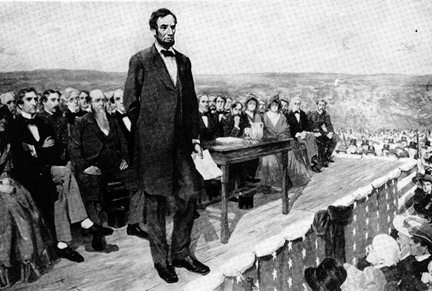 This is one of the most important speeches in US history! When I was a boy, we had to memorize this speech in school. Thankfully it isn’t very long. This speech was given at the dedication of the Soldiers’ National Cemetery in Gettysburg, Pennsylvania, four and a half months after the bloodiest battle of the Civil War took place on the same site.
Four score and seven years ago our fathers brought forth on this continent a new nation, conceived in Liberty, and dedicated to the proposition that all men are created equal.
Now we are engaged in a great civil war, testing whether that nation, or any nation, so conceived and so dedicated, can long endure. We are met on a great battle-field of that war. We have come to dedicate a portion of that field, as a final resting place for those who here gave their lives that that nation might live. It is altogether fitting and proper that we should do this.
But, in a larger sense, we can not dedicate—we can not consecrate—we can not hallow—this ground. The brave men, living and dead, who struggled here, have consecrated it, far above our poor power to add or detract. The world will little note, nor long remember what we say here, but it can never forget what they did here. It is for us the living, rather, to be dedicated here to the unfinished work which they who fought here have thus far so nobly advanced. It is rather for us to be here dedicated to the great task remaining before us—that from these honored dead we take increased devotion to that cause for which they gave the last full measure of devotion—that we here highly resolve that these dead shall not have died in vain—that this nation, under God, shall have a new birth of freedom—and that government of the people, by the people, for the people, shall not perish from the earth.
score vingt to bring forth (literary) produire, introduire whether si resting place un lieu de repos altogether complètement fitting qui convient to hallow consacrer to struggle lutter to detract diminuer rather plutôt
thus far jusqu'à présent nobly noblement, grandement task la tâche to resolve décider to perish périr
To learn more about this document and Gettysburg visit the following links:
Soldiers’ National Cemetery at Gettysburg
Animated history of the Battle of Gettysburg
The Brothers War: The Battle of Gettysburg
Gettysburg Visitor Information
The Battle of Gettysburg at Wikipedia
Gettysburg Address at Wikipedia
Gettysburg Address at Cornell University
The Emancipation Proclamation by Pres. Lincoln – January 1, 1863
In honor of both the bicentennial of Lincoln’s birth and Black History Month
Taken directly from the National Archives
The Emancipation Proclamation
 President Abraham Lincoln issued the Emancipation Proclamation on January 1, 1863, as the nation approached its third year of bloody civil war. The proclamation declared "that all persons held as slaves" within the rebellious states "are, and henceforward shall be free."
Despite this expansive wording, the Emancipation Proclamation was limited in many ways. It applied only to states that had seceded from the Union, leaving slavery untouched in the loyal border states. It also expressly exempted parts of the Confederacy that had already come under Northern control. Most important, the freedom it promised depended upon Union military victory.
Although the Emancipation Proclamation did not immediately free a single slave, it fundamentally transformed the character of the war. After January 1, 1863, every advance of federal troops expanded the domain of freedom. Moreover, the Proclamation announced the acceptance of black men into the Union Army and Navy, enabling the liberated to become liberators. By the end of the war, almost 200,000 black soldiers and sailors had fought for the Union and freedom.
From the first days of the Civil War, slaves had acted to secure their own liberty. The Emancipation Proclamation confirmed their insistence that the war for the Union must become a war for freedom. It added moral force to the Union cause and strengthened the Union both militarily and politically. As a milestone along the road to slavery's final destruction, the Emancipation Proclamation has assumed a place among the great documents of human freedom.
The document was bound with other proclamations in a large volume preserved for many years by the Department of State. When it was prepared for binding, it was reinforced with strips along the center folds and then mounted on a still larger sheet of heavy paper. Written in red ink on the upper right-hand corner of this large sheet is the number of the Proclamation, 95, given to it by the Department of State long after it was signed. With other records, the volume containing the Emancipation Proclamation was transferred in 1936 from the Department of State to the National Archives of the United States.
The original of the Emancipation Proclamation of January 1, 1863, is in the National Archives in Washington, DC. With the text covering five pages the document was originally tied with narrow red and blue ribbons, which were attached to the signature page by a wafered impression of the seal of the United States. Most of the ribbon remains; parts of the seal are still decipherable, but other parts have worn off.
| to issue | délivrer,émettre |
| rebellious | rebelle, révolté |
| henceforward | dorénavant |
| wording | la formulation |
| to secede | faire sécession |
| to expand | élargir, étendre |
| moreover | de plus |
| enabling | permettant |
| a milestone | une étape importante |
| bound | relié |
| binding | la reliure |
| strip | une bande |
| fold | le pli |
| wafered | comme une gauffre |
| decipherable | déchiffrable |
| worn off | effacé |
The Emancipation Proclamation
January 1, 1863A Transcription
By the President of the United States of America:
A Proclamation.
Whereas, on the twenty-second day of September, in the year of our Lord one thousand eight hundred and sixty-two, a proclamation was issued by the President of the United States, containing, among other things, the following, to wit:
"That on the first day of January, in the year of our Lord one thousand eight hundred and sixty-three, all persons held as slaves within any State or designated part of a State, the people whereof shall then be in rebellion against the United States, shall be then, thenceforward, and forever free; and the Executive Government of the United States, including the military and naval authority thereof, will recognize and maintain the freedom of such persons, and will do no act or acts to repress such persons, or any of them, in any efforts they may make for their actual freedom.
"That the Executive will, on the first day of January aforesaid, by proclamation, designate the States and parts of States, if any, in which the people thereof, respectively, shall then be in rebellion against the United States; and the fact that any State, or the people thereof, shall on that day be, in good faith, represented in the Congress of the United States by members chosen thereto at elections wherein a majority of the qualified voters of such State shall have participated, shall, in the absence of strong countervailing testimony, be deemed conclusive evidence that such State, and the people thereof, are not then in rebellion against the United States."
Now, therefore I, Abraham Lincoln, President of the United States, by virtue of the power in me vested as Commander-in-Chief, of the Army and Navy of the United States in time of actual armed rebellion against the authority and government of the United States, and as a fit and necessary war measure for suppressing said rebellion, do, on this first day of January, in the year of our Lord one thousand eight hundred and sixty-three, and in accordance with my purpose so to do publicly proclaimed for the full period of one hundred days, from the day first above mentioned, order and designate as the States and parts of States wherein the people thereof respectively, are this day in rebellion against the United States, the following, to wit:
Arkansas, Texas, Louisiana, (except the Parishes of St. Bernard, Plaquemines, Jefferson, St. John, St. Charles, St. James Ascension, Assumption, Terrebonne, Lafourche, St. Mary, St. Martin, and Orleans, including the City of New Orleans) Mississippi, Alabama, Florida, Georgia, South Carolina, North Carolina, and Virginia, (except the forty-eight counties designated as West Virginia, and also the counties of Berkley, Accomac, Northampton, Elizabeth City, York, Princess Ann, and Norfolk, including the cities of Norfolk and Portsmouth[)], and which excepted parts, are for the present, left precisely as if this proclamation were not issued.
And by virtue of the power, and for the purpose aforesaid, I do order and declare that all persons held as slaves within said designated States, and parts of States, are, and henceforward shall be free; and that the Executive government of the United States, including the military and naval authorities thereof, will recognize and maintain the freedom of said persons.
And I hereby enjoin upon the people so declared to be free to abstain from all violence, unless in necessary self-defence; and I recommend to them that, in all cases when allowed, they labor faithfully for reasonable wages.
And I further declare and make known, that such persons of suitable condition, will be received into the armed service of the United States to garrison forts, positions, stations, and other places, and to man vessels of all sorts in said service.
And upon this act, sincerely believed to be an act of justice, warranted by the Constitution, upon military necessity, I invoke the considerate judgment of mankind, and the gracious favor of Almighty God.
In witness whereof, I have hereunto set my hand and caused the seal of the United States to be affixed.
Done at the City of Washington, this first day of January, in the year of our Lord one thousand eight hundred and sixty three, and of the Independence of the United States of America the eighty-seventh.
By the President: ABRAHAM LINCOLN
WILLIAM H. SEWARD, Secretary of State.
| whereas | attendu que |
| to wit (phrase) | à savoir |
| whereof | de quoi, dont |
| aforesaid | susdit |
| thereto | y |
| wherein | dans lequel, où |
| countervailing | contrebalançant |
| deemed | considéré, jugé, estimé |
| vested | acquis |
| fit | propre |
| in accordance with | conformément à |
| henceforward | dorénavant |
| hereby | par la présente |
| to labor | travailler |
| wages | une salaire |
| to garrison | placer une garnison dans, tenir garnison dans, être en garnison à |
| to man | armer |
| vessel | un vaisseau |
| warranted | garanti |
| hereunto | de ceci |
Lincoln Memorial National Memorial (U.S. National Park Service)

Lincoln Memorial National Memorial (U.S. National Park Service)
Also read the Wikipedia article on the Lincoln Memorial
Subscribe to:
Posts (Atom)