Showing posts with label Phyllis Wheatley. Show all posts

18 February 2009

Culture Spot: Phyllis Wheatley, Slave and Poet

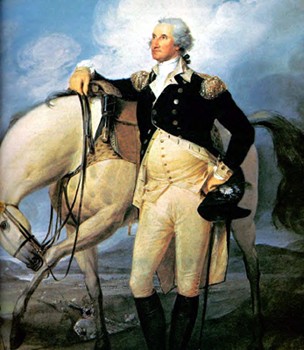
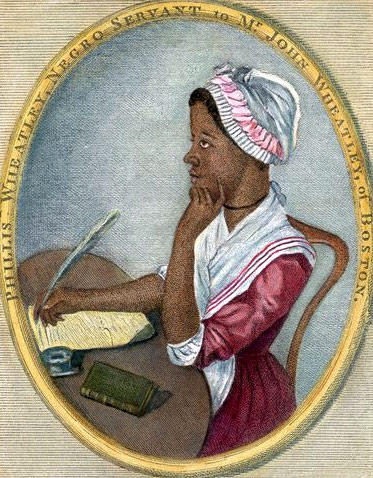
Phyllis Wheatley, born somewhere near present-day Senegal, was captured into slavery around the age of seven and sold to the Wheatley family in Boston. The Wheatleys taught her to read and write and encouraged her poetry writing. Her writing paid off when in 1773 her work Poems on Various Subjects, Religious and Moral was published. Her writings even caught the attention of General George Washington who praised her. Phyllis Wheatley’s writings helped launch African-American literature.

When the great preacher of the Great Awakening, George Whitfield died, she wrote in his honor the following poem:

On the Death of the Rev. Mr. GEORGE WHITEFIELD. 1770.

HAIL, happy saint, on thine immortal throne,
Possest of glory, life, and bliss unknown;
We hear no more the music of thy tongue,
Thy wonted auditories cease to throng.
Thy sermons in unequall'd accents flow'd,
And ev'ry bosom with devotion glow'd;
Thou didst in strains of eloquence refin'd
Inflame the heart, and captivate the mind.
Unhappy we the setting sun deplore,
So glorious once, but ah! it shines no more.
     Behold the prophet in his tow'ring flight!
He leaves the earth for heav'n's unmeasur'd height,
And worlds unknown receive him from our sight.
There Whitefield wings with rapid course his way,
And sails to Zion through vast seas of day.
Thy pray'rs, great saint, and thine incessant cries
Have pierc'd the bosom of thy native skies.
Thou moon hast seen, and all the stars of light,
How he has wrestled with his God by night.
He pray'd that grace in ev'ry heart might dwell,
He long'd to see America excell;
He charg'd its youth that ev'ry grace divine
Should with full lustre in their conduct shine;
That Saviour, which his soul did first receive,
The greatest gift that ev'n a God can give,
He freely offer'd to the num'rous throng,
That on his lips with list'ning pleasure hung.
     "Take him, ye wretched, for your only good,
"Take him ye starving sinners, for your food;
"Ye thirsty, come to this life-giving stream,
"Ye preachers, take him for your joyful theme;
"Take him my dear Americans, he said,
"Be your complaints on his kind bosom laid:
"Take him, ye Africans, he longs for you,
"Impartial Saviour is his title due:
"Wash'd in the fountain of redeeming blood,
"You shall be sons, and kings, and priests to God."
     Great Countess,* we Americans revere
Thy name, and mingle in thy grief sincere;
New England deeply feels, the Orphans mourn,
Their more than father will no more return.
     But, though arrested by the hand of death,
Whitefield no more exerts his lab'ring breath,
Yet let us view him in th' eternal skies,
Let ev'ry heart to this bright vision rise;
While the tomb safe retains its sacred trust,
Till life divine re-animates his dust.

To learn more about the life and work of this great American woman, visit the following links:

Phyllis Wheatley, America’s First Black Woman Poet

Download an ebook for free of Phyllis Wheatley’s work

Phyllis Wheatley, Wikipedia article

16 February 2009

To His Excellency General Washington by Phyllis Wheatley

Celestial choir! enthron'd in realms of light,
Columbia's scenes of glorious toils I write.
While freedom's cause her anxious breast alarms,
She flashes dreadful in refulgent arms.
See mother earth her offspring's fate bemoan,
And nations gaze at scenes before unknown!
See the bright beams of heaven's revolving light
Involved in sorrows and veil of night!
The goddess comes, she moves divinely fair,
Olive and laurel bind her golden hair:
Wherever shines this native of the skies,
Unnumber'd charms and recent graces rise.
Muse! bow propitious while my pen relates
How pour her armies through a thousand gates,
As when Eolus heaven's fair face deforms,
Enwrapp'd in tempest and a night of storms;
Astonish'd ocean feels the wild uproar,
The refluent surges beat the sounding shore;
Or thick as leaves in Autumn's golden reign,
Such, and so many, moves the warrior's train.
In bright array they seek the work of war,
Where high unfurl'd the ensign waves in air.
Shall I to Washington their praise recite?
Enough thou know'st them in the fields of fight.
Thee, first in peace and honours,—we demand
The grace and glory of thy martial band.
Fam'd for thy valour, for thy virtues more,
Hear every tongue thy guardian aid implore!
One century scarce perform'd its destined round,
When Gallic powers Columbia's fury found;
And so may you, whoever dares disgrace
The land of freedom's heaven-defended race!
Fix'd are the eyes of the nations on the scales,
For in their hopes Columbia's arm prevails.
Anon Britannia droops the pensive head,
While round increase the rising hills of dead.
Ah! cruel blindness to Columbia's state!
Lament thy thirst of boundless power too late.
Proceed, great chief, with virtue on thy side,40
Thy ev'ry action let the goddess guide.
A crown, a mansion, and a throne that shine,
With gold unfading, WASHINGTON! be thine.

This poem was written by a young slave girl from Boston, Phyllis Wheatley. You can learn more about her on Wednesday when there will be a post dedicated to the great African-American poet.

Phillis Wheatley’s poem “To His Excellency General Washington” is as unique as the poet herself. The poem was sent to George Washington, the newly appointed Commander-in-Chief of the Armies of North America, in October of 1775, well before American Independence was declared in 1776. Washington, as busy as he was with organizing the colonies to take on the British, sent a letter back to Wheatley thanking her for the poem and inviting her to visit him if she ever came to Cambridge, Massachusetts. The two did meet in March of 1776, seven years before the war was finished and true independence was declared. Washington was roundly lauded in poems and prose after the successful conclusion of the Revolutionary War in 1783, but Wheatley’s poem was written when the war’s outcome was very uncertain, the British being the obvious favorites to win. It can be said that Wheatley was the groundbreaker in beginning the Washington legend as the “father of our country,” yet she stands as a groundbreaker in even more important ways. In 1773, two years before this poem was written, Phillis Wheatley, a twenty-year-old slave, published her collection of poems entitled Poems on Various Subjects, Religious and Moral, the first book of poetry published by an African American, and only the second book by a woman in what would become the United States. Considering that Ms. Wheatley was bought at a slave auction in 1761, not able to read or write and incapable of speaking English, her book of poems is truly astounding. She was revered in many countries. Benjamin Franklin offered his services to her, as did many other high-ranking men in America. In April of 1776, the author and political philosopher Thomas Paine published Wheatley’s poem to Washington in The Pennsylvania Magazine. The central theme of this poem is “freedom’s cause,” the colonies’ struggle for freedom from England, which General Washington was assigned to lead. Like many other residents of Boston, Wheatley’s feelings for the British regime turned from obedient admiration to mild admonition, and finally, to support of the revolution. The poem anticipates the future for the new republic, and praises the efforts of its military leader and first president.

To learn more about his poem, go to the Study Guide.