Showing posts with label Black History Month. Show all posts

26 February 2009

Culture Spot: Zora Neale Hurston, 1891-1960 - A Storyteller About African-American Life in the South

Continuing in celebrating Black History Month, today’s post comes directly from Voice of America Special English. You can download an MP3 audio of the radio broadcast below. Listen to the MP3 first before looking at the transcript below. You can also access this story directly from Voice of America at the link following the transcript.

Listen to This ReportMP3 Download  (MP3)  Right click to download

Zora Neale Hurston, 1891-1960: A Storyteller About African-American Life in the South

Hurston’s books were about faith, love, family, slavery, race and community. Transcript of radio broadcast:
21 February 2009

VOICE ONE:

I'm Mary Tillotson.

VOICE TWO:

And I'm Steve Ember with the VOA Special English program PEOPLE IN AMERICA. Today, we tell about writer Zora Neale Hurston. She was one of the most recognized black women writers. She wrote seven books and more than one hundred short stories, plays and articles for magazines.

(MUSIC)

VOICE ONE:

Zora Neale Hurston

(photo) Zora Neale Hurston

Zora Neale Hurston was born in eighteen ninety-one in Notasulga, Alabama. A short time later, her family moved to Eatonville, a small town in central Florida. All of the people of Eatonville were African-American. The town shaped Hurston's life and her writing. As a child, she would listen closely to the stories told by the adults in the town.  Several of her books take place in communities very similar to Eatonville. The people she wrote about in her books are very similar to people she knew there.

Zora was born at a time of racial tensions between blacks and whites in the southern United States. But she never felt angry about being black. In her stories, she described Eatonville as a place where black Americans could live as they pleased.

Zora Neale Hurston was known for her ability to tell a story. Storytelling is an important part of many cultural traditions. African-American storytelling is a strong family tradition that dates back hundreds of years.  It is a way for people to establish their identities in often unfriendly areas as they struggle to hold their communities together.

(MUSIC)

VOICE TWO:

Zora Neale Hurston was the fifth of eight children.  Zora's mother was a schoolteacher.  Her father was a builder and a church preacher. He also became the mayor of Eatonville. Zora's mother died in nineteen-oh-four, when Zora was thirteen years old. Her mother's death severely affected Zora's life.  She was rejected by her father and his second wife. Zora was forced to take care of herself.

She left Eatonville and moved north when she was fourteen years old. She worked for a traveling theater company. She also worked as a maid, cleaning the homes of white people. One of her employers recognized Zora's abilities. She made it possible for her to attend high school in Baltimore, Maryland.

Zora was twenty-six years old when she began high school. But she said she was only sixteen.  Throughout her life, she often said she was younger than she really was.

VOICE ONE:                                                       

In nineteen eighteen, Zora Neale Hurston attended Howard University in Washington, D.C. She studied with Alain Locke. He was a professor of philosophy and an expert on black culture.  She earned money by working as a maid and doing other work.

Hurston published her first short stories at Howard University. Her stories were about black folklore and life in Eatonville. She won prizes for her writings that were published in newspapers and magazines.  The early nineteen twenties marked the beginning of Zora Neale Hurston's life as a writer.

(MUSIC)

VOICE TWO:

Zora Neale Hurston at the New York Times Book Fair in the 1930s

(photo) Zora Neale Hurston at the New York Times Book Fair in the 1930s

In nineteen twenty-five, Hurston traveled to New York City. This was during the period known as the Harlem Renaissance. Harlem is a famous area in New York. The Harlem Renaissance was a period in which black artists explored their culture and showed pride in their race. This was expressed in literature, music and other art forms. Hurston and her stories about Eatonville became important during the Harlem Renaissance. She met other young black writers of the time, such as poet Langston Hughes.

Hurston became the first black student to attend Barnard College in New York. She studied with anthropologist Franz Boas.  She became interested in anthropology -- the study of the origin, development and actions of humans. Boas recognized Hurston's storytelling ability and deep interest in the black culture of the South. He urged her to do more research there.

VOICE ONE:

Hurston received financial support for most of her research from a wealthy woman in New York named Charlotte Osgood Mason. During the next several years, Hurston traveled in Florida and the Caribbean to collect and write stories about what she saw. She learned about the traditions of the people she met. She spoke with men and women, young and old, collecting their stories in their own words. She wanted to keep the language exactly as they told it. Many of the stories were like those she had heard as a child.

VOICE TWO:

In nineteen thirty-six, Hurston traveled to Jamaica and Haiti with a financial award from the Guggenheim Foundation.  The Caribbean people accepted her as one of them. They spoke with her freely, even about religious traditions. In Haiti, she learned a great deal about the voodoo religion.

Hurston published two important collections of stories based on her research.  They were "Mules and Men" and "Tell My Horse." Both examined the voodoo religion.

(MUSIC)

VOICE ONE:

Zora Neale HurstonZora Neale Hurston published her first book, "Jonah's Gourd Vine," in nineteen thirty-four. The story takes place in a small Florida town. It is about two people similar to her parents. Her second book, "Their Eyes Were Watching God," was published three years later. It is widely considered her most important work. She wrote the book in seven weeks while she was traveling in Haiti. It is the story of a black woman's search for happiness and her true identity, during twenty-five years and three marriages.

In nineteen forty-two, Hurston published a story about her own life, called "Dust Tracks on a Road." But the book was widely criticized. Literary experts said it was full of false information. Others said it added to the mystery surrounding the writer.                   

Hurston's last two novels were the biblical story "Moses, Man of the Mountain" and "Seraph on the Suwanee."  This was the only book she wrote about white people.

(MUSIC)

VOICE TWO:

Zora Neale Hurston's stories were about the pain-filled and sometimes magical world that surrounded blacks in the South. The stories tell about faith, love, family, slavery, race and community. They also include humor. Hurston was well known for her writing. She also became known for her outspoken opinions, her clothing and the great pride she had in herself and her race.                                            

She was married three times. But she found it impossible to settle down. Her husbands usually expected her to give up her writing. But she said that was the one thing she could not do.

VOICE ONE:          

Hurston received praise for her work by both blacks and whites. But not everyone enjoyed her work. Some of the writers of the Harlem Renaissance criticized her for writing about black culture instead of relations between the races. Many blacks also rejected Hurston's political ideas and her support for racial separation laws in the South.

Hurston, however, made no apologies for her work.  She said the richness of black culture existed to be enjoyed, celebrated and made into literature.

VOICE TWO:

During the late nineteen forties, she began to publish less and less. She was arrested and charged with sexual wrongdoing with a ten-year-old boy. The charges were later dropped, but the event affected her work and her life.

In nineteen fifty, Hurston returned to Florida.  Although her work was quite popular, she was unable to make a living with her writing. In her later years, she worked as a teacher, a librarian and as maid. In nineteen fifty-nine, Hurston suffered a stroke and entered a nursing home in Fort Pierce, Florida. She died there a year later and was buried in an unmarked grave.

(MUSIC)

VOICE ONE:

Today, Zora Neale Hurston has not been forgotten. She influenced other African-American female writers, including Alice Walker. Because of Walker's efforts, Hurston's work was rediscovered in the nineteen seventies. During the nineteen nineties, her book "Their Eyes Were Watching God" sold more than one million copies. Many young people in American schools are reading the book. In addition, two of Hurston's plays have been produced. New books have been written about her. And her work and life are the subject of many studies, conferences and festivals.

In nineteen seventy-three, Alice Walker placed a marker in Fort Pierce, Florida, where Hurston is believed to be buried.  The stone reads, "Zora Neale Hurston, A Genius of the South."

(MUSIC)

VOICE TWO:

This Special English program was written and produced by Cynthia Kirk. I'm Steve Ember.

VOICE ONE:

And I'm Mary Tillotson. Join us again next week for another PEOPLE IN AMERICA program on the Voice of America.

VOA News - Zora Neale Hurston, 1891-1960: A Storyteller About African-American Life in the South

24 February 2009

Culture Spot: African Americans in the North during World War I and the Chicago Race Riot of 1919 (Video)

In this video you will learn how at the beginning of the 20th century, many African Americans, looking for a better life and an escape from racial segregation in the South, went North to work in Northern industries. World War I further encouraged this immigration as the North needed laborers. Support for the war was divided in the Black community since some refused to support what they saw was a racist government. Unfortunately, African Americans learned that racism wasn't confined to the South. Racial tensions grew in the North as many African American were willing to replace workers on strike. Violence against Blacks by Whites increased until finally in 1919, a race riot broke out in Chicago.

I have added English subtitles to this video.

To learn more:

Jazz Age Chicago -- Chicago Race Riot of 1919
Chicago Race Riot of 1919 - Wikipedia, the free encyclopedia

23 February 2009

Culture Spot: The Buffalo Soldiers (Video)

African-American soldiers have fought in American wars since colonial days. 180,000 Black soldiers served in the Civil War. The Buffalo Soldiers of the late 1800s took their name from the Native Americans..

Buffalo Soldiers
envoyé par josephboen

to abolish


abolir

to be up to a challenge


pouvoir relever un défi / le challenge

curly


frisé

to remind


rappeler

tenacity


la détermination, la ténacité

cornered


piégé

to affix


attacher

a will


une volonté, une détermination

a chief warrant officer


un adjudant-chef

to devote oneself to


se consacrer à

through


à travers, par

to contend with


affronter

purpose


le but

to disdain


mépriser, dédaigner

a lesser rank


un rang de moindre importance

pride


une fierté

to swell up


enfler

to prove


démontrer, prouver

worth


la valeur

Learn more about Buffalo Soldiers at BuffaloSoldiers.com

General George Armstrong Custer

18 February 2009

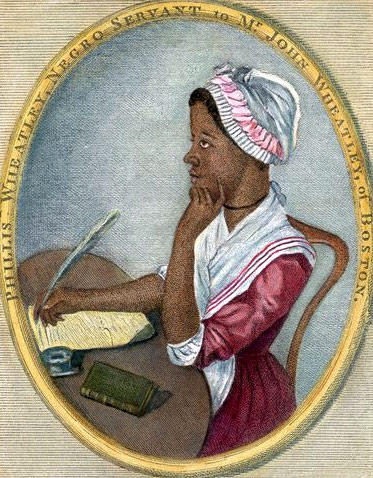
Culture Spot: Phyllis Wheatley, Slave and Poet

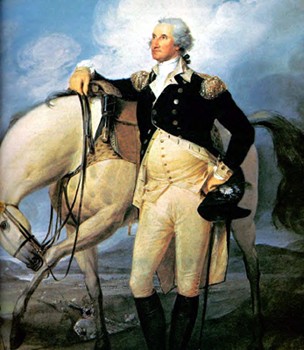
Phyllis Wheatley, born somewhere near present-day Senegal, was captured into slavery around the age of seven and sold to the Wheatley family in Boston. The Wheatleys taught her to read and write and encouraged her poetry writing. Her writing paid off when in 1773 her work Poems on Various Subjects, Religious and Moral was published. Her writings even caught the attention of General George Washington who praised her. Phyllis Wheatley’s writings helped launch African-American literature.
When the great preacher of the Great Awakening, George Whitfield died, she wrote in his honor the following poem:

On the Death of the Rev. Mr. GEORGE WHITEFIELD. 1770.

HAIL, happy saint, on thine immortal throne,
Possest of glory, life, and bliss unknown;
We hear no more the music of thy tongue,
Thy wonted auditories cease to throng.
Thy sermons in unequall'd accents flow'd,
And ev'ry bosom with devotion glow'd;
Thou didst in strains of eloquence refin'd
Inflame the heart, and captivate the mind.
Unhappy we the setting sun deplore,
So glorious once, but ah! it shines no more.
     Behold the prophet in his tow'ring flight!
He leaves the earth for heav'n's unmeasur'd height,
And worlds unknown receive him from our sight.
There Whitefield wings with rapid course his way,
And sails to Zion through vast seas of day.
Thy pray'rs, great saint, and thine incessant cries
Have pierc'd the bosom of thy native skies.
Thou moon hast seen, and all the stars of light,
How he has wrestled with his God by night.
He pray'd that grace in ev'ry heart might dwell,
He long'd to see America excell;
He charg'd its youth that ev'ry grace divine
Should with full lustre in their conduct shine;
That Saviour, which his soul did first receive,
The greatest gift that ev'n a God can give,
He freely offer'd to the num'rous throng,
That on his lips with list'ning pleasure hung.
     "Take him, ye wretched, for your only good,
"Take him ye starving sinners, for your food;
"Ye thirsty, come to this life-giving stream,
"Ye preachers, take him for your joyful theme;
"Take him my dear Americans, he said,
"Be your complaints on his kind bosom laid:
"Take him, ye Africans, he longs for you,
"Impartial Saviour is his title due:
"Wash'd in the fountain of redeeming blood,
"You shall be sons, and kings, and priests to God."
     Great Countess,* we Americans revere
Thy name, and mingle in thy grief sincere;
New England deeply feels, the Orphans mourn,
Their more than father will no more return.
     But, though arrested by the hand of death,
Whitefield no more exerts his lab'ring breath,
Yet let us view him in th' eternal skies,
Let ev'ry heart to this bright vision rise;
While the tomb safe retains its sacred trust,
Till life divine re-animates his dust.

To learn more about the life and work of this great American woman, visit the following links:

Phyllis Wheatley, America’s First Black Woman Poet

Download an ebook for free of Phyllis Wheatley’s work

Phyllis Wheatley, Wikipedia article

16 February 2009

To His Excellency General Washington by Phyllis Wheatley

Celestial choir! enthron'd in realms of light,
Columbia's scenes of glorious toils I write.
While freedom's cause her anxious breast alarms,
She flashes dreadful in refulgent arms.
See mother earth her offspring's fate bemoan,
And nations gaze at scenes before unknown!
See the bright beams of heaven's revolving light
Involved in sorrows and veil of night!
The goddess comes, she moves divinely fair,
Olive and laurel bind her golden hair:
Wherever shines this native of the skies,
Unnumber'd charms and recent graces rise.
Muse! bow propitious while my pen relates
How pour her armies through a thousand gates,
As when Eolus heaven's fair face deforms,
Enwrapp'd in tempest and a night of storms;
Astonish'd ocean feels the wild uproar,
The refluent surges beat the sounding shore;
Or thick as leaves in Autumn's golden reign,
Such, and so many, moves the warrior's train.
In bright array they seek the work of war,
Where high unfurl'd the ensign waves in air.
Shall I to Washington their praise recite?
Enough thou know'st them in the fields of fight.
Thee, first in peace and honours,—we demand
The grace and glory of thy martial band.
Fam'd for thy valour, for thy virtues more,
Hear every tongue thy guardian aid implore!
One century scarce perform'd its destined round,
When Gallic powers Columbia's fury found;
And so may you, whoever dares disgrace
The land of freedom's heaven-defended race!
Fix'd are the eyes of the nations on the scales,
For in their hopes Columbia's arm prevails.
Anon Britannia droops the pensive head,
While round increase the rising hills of dead.
Ah! cruel blindness to Columbia's state!
Lament thy thirst of boundless power too late.
Proceed, great chief, with virtue on thy side,40
Thy ev'ry action let the goddess guide.
A crown, a mansion, and a throne that shine,
With gold unfading, WASHINGTON! be thine.

This poem was written by a young slave girl from Boston, Phyllis Wheatley. You can learn more about her on Wednesday when there will be a post dedicated to the great African-American poet.

Phillis Wheatley’s poem “To His Excellency General Washington” is as unique as the poet herself. The poem was sent to George Washington, the newly appointed Commander-in-Chief of the Armies of North America, in October of 1775, well before American Independence was declared in 1776. Washington, as busy as he was with organizing the colonies to take on the British, sent a letter back to Wheatley thanking her for the poem and inviting her to visit him if she ever came to Cambridge, Massachusetts. The two did meet in March of 1776, seven years before the war was finished and true independence was declared. Washington was roundly lauded in poems and prose after the successful conclusion of the Revolutionary War in 1783, but Wheatley’s poem was written when the war’s outcome was very uncertain, the British being the obvious favorites to win. It can be said that Wheatley was the groundbreaker in beginning the Washington legend as the “father of our country,” yet she stands as a groundbreaker in even more important ways. In 1773, two years before this poem was written, Phillis Wheatley, a twenty-year-old slave, published her collection of poems entitled Poems on Various Subjects, Religious and Moral, the first book of poetry published by an African American, and only the second book by a woman in what would become the United States. Considering that Ms. Wheatley was bought at a slave auction in 1761, not able to read or write and incapable of speaking English, her book of poems is truly astounding. She was revered in many countries. Benjamin Franklin offered his services to her, as did many other high-ranking men in America. In April of 1776, the author and political philosopher Thomas Paine published Wheatley’s poem to Washington in The Pennsylvania Magazine. The central theme of this poem is “freedom’s cause,” the colonies’ struggle for freedom from England, which General Washington was assigned to lead. Like many other residents of Boston, Wheatley’s feelings for the British regime turned from obedient admiration to mild admonition, and finally, to support of the revolution. The poem anticipates the future for the new republic, and praises the efforts of its military leader and first president.

To learn more about his poem, go to the Study Guide.

13 February 2009

Culture Spot: Bessie Coleman,First African-American pilot

Bessie Colman, known as “Queen Bess,” became the first African-American pilot and the first American to hold an international pilot’s license.

colored de couleur
a galune fille, une nana
to dare someone défier
to boostpousser
to find outapprendre, découvrir
to make one’s wayse diriger vers
elationl’exaltation
to hand donner
liftla portance
weightla masse d’équilibrage
thrustla poussée
dragla résistance, la traînée
masteringen maîtrissant
to achieveatteindre
goalun objectif

To learn more about this extraordinary woman, read the Wikipedia article.

http://www.bessiecoleman.com/

12 February 2009

The Emancipation Proclamation by Pres. Lincoln – January 1, 1863

In honor of both the bicentennial of Lincoln’s birth and Black History Month

Taken directly from the National Archives

The Emancipation Proclamation

President Abraham Lincoln issued the Emancipation Proclamation on January 1, 1863, as the nation approached its third year of bloody civil war. The proclamation declared "that all persons held as slaves" within the rebellious states "are, and henceforward shall be free."

Despite this expansive wording, the Emancipation Proclamation was limited in many ways. It applied only to states that had seceded from the Union, leaving slavery untouched in the loyal border states. It also expressly exempted parts of the Confederacy that had already come under Northern control. Most important, the freedom it promised depended upon Union military victory.

Although the Emancipation Proclamation did not immediately free a single slave, it fundamentally transformed the character of the war. After January 1, 1863, every advance of federal troops expanded the domain of freedom. Moreover, the Proclamation announced the acceptance of black men into the Union Army and Navy, enabling the liberated to become liberators. By the end of the war, almost 200,000 black soldiers and sailors had fought for the Union and freedom.

From the first days of the Civil War, slaves had acted to secure their own liberty. The Emancipation Proclamation confirmed their insistence that the war for the Union must become a war for freedom. It added moral force to the Union cause and strengthened the Union both militarily and politically. As a milestone along the road to slavery's final destruction, the Emancipation Proclamation has assumed a place among the great documents of human freedom.

The document was bound with other proclamations in a large volume preserved for many years by the Department of State. When it was prepared for binding, it was reinforced with strips along the center folds and then mounted on a still larger sheet of heavy paper. Written in red ink on the upper right-hand corner of this large sheet is the number of the Proclamation, 95, given to it by the Department of State long after it was signed. With other records, the volume containing the Emancipation Proclamation was transferred in 1936 from the Department of State to the National Archives of the United States.

The original of the Emancipation Proclamation of January 1, 1863, is in the National Archives in Washington, DC. With the text covering five pages the document was originally tied with narrow red and blue ribbons, which were attached to the signature page by a wafered impression of the seal of the United States. Most of the ribbon remains; parts of the seal are still decipherable, but other parts have worn off.

to issue délivrer,émettre
rebellious rebelle, révolté
henceforward dorénavant
wording la formulation
to secede faire sécession
to expand élargir, étendre
moreover de plus
enabling permettant
a milestone une étape importante
bound relié
binding la reliure
strip une bande
fold le pli
wafered comme une gauffre
decipherable déchiffrable
worn off effacé

The Emancipation Proclamation
January 1, 1863

A Transcription

By the President of the United States of America:

A Proclamation.

Whereas, on the twenty-second day of September, in the year of our Lord one thousand eight hundred and sixty-two, a proclamation was issued by the President of the United States, containing, among other things, the following, to wit:

"That on the first day of January, in the year of our Lord one thousand eight hundred and sixty-three, all persons held as slaves within any State or designated part of a State, the people whereof shall then be in rebellion against the United States, shall be then, thenceforward, and forever free; and the Executive Government of the United States, including the military and naval authority thereof, will recognize and maintain the freedom of such persons, and will do no act or acts to repress such persons, or any of them, in any efforts they may make for their actual freedom.

"That the Executive will, on the first day of January aforesaid, by proclamation, designate the States and parts of States, if any, in which the people thereof, respectively, shall then be in rebellion against the United States; and the fact that any State, or the people thereof, shall on that day be, in good faith, represented in the Congress of the United States by members chosen thereto at elections wherein a majority of the qualified voters of such State shall have participated, shall, in the absence of strong countervailing testimony, be deemed conclusive evidence that such State, and the people thereof, are not then in rebellion against the United States."

Now, therefore I, Abraham Lincoln, President of the United States, by virtue of the power in me vested as Commander-in-Chief, of the Army and Navy of the United States in time of actual armed rebellion against the authority and government of the United States, and as a fit and necessary war measure for suppressing said rebellion, do, on this first day of January, in the year of our Lord one thousand eight hundred and sixty-three, and in accordance with my purpose so to do publicly proclaimed for the full period of one hundred days, from the day first above mentioned, order and designate as the States and parts of States wherein the people thereof respectively, are this day in rebellion against the United States, the following, to wit:

Arkansas, Texas, Louisiana, (except the Parishes of St. Bernard, Plaquemines, Jefferson, St. John, St. Charles, St. James Ascension, Assumption, Terrebonne, Lafourche, St. Mary, St. Martin, and Orleans, including the City of New Orleans) Mississippi, Alabama, Florida, Georgia, South Carolina, North Carolina, and Virginia, (except the forty-eight counties designated as West Virginia, and also the counties of Berkley, Accomac, Northampton, Elizabeth City, York, Princess Ann, and Norfolk, including the cities of Norfolk and Portsmouth[)], and which excepted parts, are for the present, left precisely as if this proclamation were not issued.

And by virtue of the power, and for the purpose aforesaid, I do order and declare that all persons held as slaves within said designated States, and parts of States, are, and henceforward shall be free; and that the Executive government of the United States, including the military and naval authorities thereof, will recognize and maintain the freedom of said persons.

And I hereby enjoin upon the people so declared to be free to abstain from all violence, unless in necessary self-defence; and I recommend to them that, in all cases when allowed, they labor faithfully for reasonable wages.

And I further declare and make known, that such persons of suitable condition, will be received into the armed service of the United States to garrison forts, positions, stations, and other places, and to man vessels of all sorts in said service.

And upon this act, sincerely believed to be an act of justice, warranted by the Constitution, upon military necessity, I invoke the considerate judgment of mankind, and the gracious favor of Almighty God.

In witness whereof, I have hereunto set my hand and caused the seal of the United States to be affixed.

Done at the City of Washington, this first day of January, in the year of our Lord one thousand eight hundred and sixty three, and of the Independence of the United States of America the eighty-seventh.

By the President: ABRAHAM LINCOLN
WILLIAM H. SEWARD, Secretary of State.

whereas attendu que
to wit (phrase) à savoir
whereof de quoi, dont
aforesaid susdit
thereto y
wherein dans lequel, où
countervailing contrebalançant
deemed considéré, jugé, estimé
vested acquis
fit propre
in accordance with conformément à
henceforward dorénavant
hereby par la présente
to labor travailler
wages une salaire
to garrison placer une garnison dans, tenir garnison dans, être en garnison à
to man armer
vessel un vaisseau
warranted garanti
hereunto de ceci

11 February 2009

Culture Spot: Harriet Tubman (Video Lesson)

As part of Black History Month, here is the story of slavery abolitionist Harriet Tubman. She was born into slavery in Maryland but eventually escaped to Pennsylvania. She returned to Maryland secretly several times in order to rescue her family out of bondage. Over time she led dozens of other slaves out and never lost one earning her the name “Moses.'’ When the Civil War broke out, she worked for the Union army as a cook, a nurse and then as a spy. At the end of the war, she worked hard for the women’s suffrage movement. To learn more about this great American woman, read about her at the following links:

Wikipedia - Harriet_Tubman

Harriet Tubman: Online Resources

Harriet, the Moses of Her People by Sarah H. Bradford (a on-line book to download)

Scenes in the Life of Harriet Tubman

Bound For The Promised Land: Harriet Tubman, Portrait of an American Hero

Now follow the link below to watch a very good MSN video about Harriet Tubman and print out the worksheet below to answer the comprehension questions.

Profile of Harriet Tubman

Profile of Harriet Tubman

10 February 2009

Free Audio Book to Download: Narrative of the Life of Frederick Douglass, An American Slave

As part of celebrating Black History Month, download the FREE audio book below written by one of America’s greatest abolitionists and statesmen. He is a prominent figure in African-American history and his literary work is a masterpiece! I have read this book and I very highly recommend it! Most of this post comes from FreeAudio.org

Narrative of the Life of Frederick Douglass, An American Slave By Frederick Douglass

First published in 1845, the Narrative of the life of Frederick Douglass became Frederick Douglass’s most well known work. It is as the name implies, his autobiography.

Frederick Douglass was born a slave and underwent horrendous treatment at the hands of his ‘owners’. He later escaped to the north and became an outspoken abolitionist. Not only did he have a great life story to tell, his skill in telling it has long been admired. Douglass traveled throughout Europe lecturing about slavery.

After publication, the Narrative of the life of Frederick Douglass quickly became a best seller and within three years there were over 11,000 copies published in the United States had been reprinted nine times and had been translated into two languages (Dutch and French). The book was so well written that some argued that an ex-slave could not be as articulate as Frederick Douglass demonstrated himself to be. Of course, Douglass did write the book and it stands today as a monument to the human spirit and what may be achieved with hard work - no matter where in society somebody may begin.

Frederick Douglass had to leave the United States and flee to Ireland for a period after the books publication and its immediate success for some believed that Douglass’s ex-owner Hugh Auld might try to get his ‘property’ returned. After two years, he was able to return to the United States after his freedom was purchased for $710 from Auld.

If you are interested in learning about the life of a great man who rose above his birth as a slave and became one of the greatest literary figures in American history, the Narrative of the Life of Frederick Douglass is the book to read.

Download Links: (right-click to save MP3 file)

Narrative of the Life of Frederick Douglass, Part 1 : Approximately 13MB Narrative of the Life of Frederick Douglass, Part 2 : Approximately 12MB Narrative of the Life of Frederick Douglass, Part 3 : Approximately 13MB

.Zip Archive -- Divided into Three Minutes Track

FreeAudio.org -- Free Audio Books on Liberty and Freedom

You can read the book at: Narrative of the Life of Frederick Douglass at Project Gutenberg (plain text and HTML).

The Narrative of the Life of Frederick Douglass at Wikipedia

Frederick Douglass at Wikipedia

Frederick Douglas National Historic Site The Washington, DC home of Frederick Douglass

Mr. Lincoln's White House: Frederick Douglass

08 February 2009

Video: Former Slave Speaks Out

In honor of Black History Month

Former slave speaks out

NOTE: To watch the video from MSN, click on the above image link. Be patient, there is unfortunately an advertisement first. You will have captions of his testimony so you will be able to understand his accent.

04 February 2009

George Washington Carver (video lesson)

In celebration of Black History Month, here's a short video on the life of George Washington Carver, American scientist, botanist, educator and inventor.

To learn more about this great man, visit the George Washington Carver National Monument website and read the article about him at Wikipedia.

George Washington Carver

01 February 2009

Black History Month

February is Black History Month in the United States and Canada!
To learn more about the history of African-Americans, visit Black History at History.com and Black History at Biography.com .