25 April 2010 - It appeared certain that Governor Haley Barbour of Mississippi was going to throw his hat into the ring and seek the Republican Party nomination for President of the United States in 2012. He had lined up an official May 2 announcement that would be following by a fly-around to several states winding up back in Jackson, Mississippi for a huge fundraising bash. He even lined up a campaign manager. However, to the surprise of his backers, Barbour announced on Monday that he was pulling the plug. One of the reasons he gave for his decision to not run for the presidency was that he couldn’t offer with “total certainty” a commitment to endure the crucible of a presidential campaign.
VOCABULARY:
to throw one’s hat into the ring:to enter a political race as a candidate; to announce that you intend to compete for something (This expression comes from the early 19th century when boxing was very popular. If anyone wished to challenge a boxer, he would simply throw his hat into the boxing ring.)
to line up:to organize or prepare things for an event or a series of events
to wind up:to end something (Here, Barbour would finish his fly-around the country in Jackson, Mississippi.)
a bash: a party or a celebration
a backer:a supporter (the verb is ‘to back’)
to pull the plug: to stop an activity (It is used especially when money is no longer being provided to allow an activity to continue. A plug is what is connected to the electrical socket in the wall to make our appliances work. If you remove it from the wall, electricity is no longer supplied and the appliance stops working.)
a crucible:an environment that is very dangerous, difficult or exciting
World War I – known at the time as “The Great War” - officially ended when the Treaty of Versailles was signed on June 28, 1919, in the Palace of Versailles outside the town of Versailles, France. However, fighting ceased seven months earlier when an armistice, or temporary cessation of hostilities, between the Allied nations and Germany went into effect on the eleventh hour of the eleventh day of the eleventh month. For that reason, November 11, 1918, is generally regarded as the end of “the war to end all wars.”
Soldiers of the 353rd Infantry near a church at Stenay, Meuse in France, wait for the end of hostilities. This photo was taken at 10:58 a.m., on November 11, 1918, two minutes before the armistice ending World War I went into effect
In November 1919, President Wilson proclaimed November 11 as the first commemoration of Armistice Day with the following words: "To us in America, the reflections of Armistice Day will be filled with solemn pride in the heroism of those who died in the country’s service and with gratitude for the victory, both because of the thing from which it has freed us and because of the opportunity it has given America to show her sympathy with peace and justice in the councils of the nations…"
The original concept for the celebration was for a day observed with parades and public meetings and a brief suspension of business beginning at 11:00 a.m.
The United States Congress officially recognized the end of World War I when it passed a concurrent resolution on June 4, 1926, with these words:
Whereas the 11th of November 1918, marked the cessation of the most destructive, sanguinary, and far reaching war in human annals and the resumption by the people of the United States of peaceful relations with other nations, which we hope may never again be severed, and
Whereas it is fitting that the recurring anniversary of this date should be commemorated with thanksgiving and prayer and exercises designed to perpetuate peace through good will and mutual understanding between nations; and
Whereas the legislatures of twenty-seven of our States have already declared November 11 to be a legal holiday: Therefore be it Resolved by the Senate (the House of Representatives concurring), that the President of the United States is requested to issue a proclamation calling upon the officials to display the flag of the United States on all Government buildings on November 11 and inviting the people of the United States to observe the day in schools and churches, or other suitable places, with appropriate ceremonies of friendly relations with all other peoples.
An Act (52 Stat. 351; 5 U. S. Code, Sec. 87a) approved May 13, 1938, made the 11th of November in each year a legal holiday—a day to be dedicated to the cause of world peace and to be thereafter celebrated and known as "Armistice Day." Armistice Day was primarily a day set aside to honor veterans of World War I, but in 1954, after World War II had required the greatest mobilization of soldiers, sailors, Marines and airmen in the Nation’s history; after American forces had fought aggression in Korea, the 83rd Congress, at the urging of the veterans service organizations, amended the Act of 1938 by striking out the word "Armistice" and inserting in its place the word "Veterans." With the approval of this legislation (Public Law 380) on June 1, 1954, November 11th became a day to honor American veterans of all wars.
Later that same year, on October 8th, President Dwight D. Eisenhower issued the first "Veterans Day Proclamation" which stated: "In order to insure proper and widespread observance of this anniversary, all veterans, all veterans' organizations, and the entire citizenry will wish to join hands in the common purpose. Toward this end, I am designating the Administrator of Veterans' Affairs as Chairman of a Veterans Day National Committee, which shall include such other persons as the Chairman may select, and which will coordinate at the national level necessary planning for the observance. I am also requesting the heads of all departments and agencies of the Executive branch of the Government to assist the National Committee in every way possible."
President Eisenhower signing HR7786, changing Armistice Day to Veterans Day. From left: Alvin J. King, Wayne Richards, Arthur J. Connell, John T. Nation, Edward Rees, Richard L. Trombla, Howard W. Watts
In 1958, the White House advised VA's General Counsel that the 1954 designation of the VA Administrator as Chairman of the Veterans Day National Committee applied to all subsequent VA Administrators. Since March 1989 when VA was elevated to a cabinet level department, the Secretary of Veterans Affairs has served as the committee's chairman.
The Uniform Holiday Bill (Public Law 90-363 (82 Stat. 250)) was signed on June 28, 1968, and was intended to ensure three-day weekends for Federal employees by celebrating four national holidays on Mondays: Washington's Birthday, Memorial Day, Veterans Day, and Columbus Day. It was thought that these extended weekends would encourage travel, recreational and cultural activities and stimulate greater industrial and commercial production. Many states did not agree with this decision and continued to celebrate the holidays on their original dates.
The first Veterans Day under the new law was observed with much confusion on October 25, 1971. It was quite apparent that the commemoration of this day was a matter of historic and patriotic significance to a great number of our citizens, and so on September 20th, 1975, President Gerald R. Ford signed Public Law 94-97 (89 Stat. 479), which returned the annual observance of Veterans Day to its original date of November 11, beginning in 1978. This action supported the desires of the overwhelming majority of state legislatures, all major veterans service organizations and the American people.
Veterans Day continues to be observed on November 11, regardless of what day of the week on which it falls. The restoration of the observance of Veterans Day to November 11 not only preserves the historical significance of the date, but helps focus attention on the important purpose of Veterans Day: A celebration to honor America's veterans for their patriotism, love of country, and willingness to serve and sacrifice for the common good.
By Rick McKee from the Augusta Chronicle in Augusta, Georgia on 02 July 2010.
It is a sheer pleasure teaching English to someone who really wants to learn it! This adjective is used to give emphasis to a noun to give it a greater amount of degree. It has the meaning of ‘extreme.’
Later on, the caricature of Kagan asks Larry King, the interviewer, to grant her a point of personal privilege. If you grant something, like a request, you accord or allow them something.
‘A point of personal privilege’ is a very formal, parliamentary expression usually asked for when a member what to speak out to defend his personal rights, reputation or conduct.
to become more strict, or to make something more strict
Example: Due to the current economic crisis, many countries are toughening (up) financial rules.
to be a matter of
-
to be a question of
Example: It’s only a matter of time before he realizes the mistake he made.
undocumented(adj.)
-
lacking documentation or authentication; lacking proper immigration or working papers
Example: About 60% of the illegal alien population in the US are "undocumented aliens," who are commonly known as "unlawful border crossers," or more properly known as "illegal aliens."
to make a mockery of something
-
to make someone or something seem stupid or useless
Example: Ten-year marriage contracts would make a total mockery of marriage vows.
to urge
-
to advise someone very strongly about what action or attitude they should take
Example: Environmentalists are urging the US Government to stop drilling for oil in the Gulf of Mexico.
an appetite for
-
to advise someone very strongly about what action or attitude they should take
Example: The public’s appetite for celebrity gossip seems insatiable.
Synonym: a desire for
mixed(adj.)
-
mixed feelings or emotions make you not certain how you feel about someone or something
Example: Teachers have mixed feelings about the use of distance language teaching.
coverage (uncountable)
-
news about something on television or radio or in the newspapers
Example: People around the world watched live coverage of the FIFA World Cup on television.
to shine a spotlight on something
-
to give a lot of importance to, to give a lot of public attention to
Example: The BP oil spill is shining the spotlight on how dangerous and difficult deepwater drilling can be.
Other expressions: to be in the spotlight (= to have a lot of public attention) ≠ to be out of the spotlight
after (prep.)
-
in quest or pursuit of something
Example: Participants in Star Academy are seeking after fame. / Some believe that President Obama is going after amnesty for illegal immigrants.
a spin (informal / uncountable)
-
a way of presenting information, especially a way that makes something seem good or less bad
Example: Not even the craftiest politician could put a positive spin on this.
Other Expressions: to spin a story / a spin doctor (=someone who works in public relations or the media who presents news in a way to promote a particular political agenda, they usually try to make a situation look better or worse than what it really is)
to enact legislation
-
to make into an act or statute
Example: With the president’s signature, the new legislation/bill on healthcare reform was enacted into law.
to stem
-
to stop something from spreading or increasing, especially something bad
Example: France passed a new retirement policy in an attempt to stem an increasing budget deficit.
misguided (adj.)
-
a misguided idea or action is based on judgments or opinions that are wrong
Example: Many people believe that the war in Iraq was misguided.
Synonym: unfounded
the purview
-
the area of responsibility or influence that a person or organization has
Example: Organizing new training is under the purview of the human resources department.
to put forth(formal)
-
to state or offer an idea, opinion, plan ,etc
Example: The French government put forth a plan to reform retirement benefits.
to require
-
if a rule, law, contract etc requires something, you must do that thing
Example: Car insurance is required by law in most countries.
to be driven by something
-
is motivated by
Example: He is driven by the desire to be the best football player.
to outline
-
to give the main ideas of a plan or a piece of writing without giving all the details
Example: The document outlines our company’s recycling policy.
contentious (adj.)
-
causing disagreement between people or groups
Example: Abortion in the United States is a major contentious issue.
to take something/someone on
-
to fight or compete against someone
Example: The United States took on Ghana at the FIFA World Cup but was eliminated by them.
pandering(from the verb ‘to pander’)
-
this is the act of saying or doing what someone wants in order to please them, even though you know it isn’t right.
Example: Politicians do a lot of pandering during election time and really don’t mean a lot of what they say or promise.
So, what do you think? Did the president’s speech on comprehensive immigration reform make any progress or was he simply pandering? What immigration reform would you like to see in your country? Please feel free to leave your comments!
On this day in 1831, James Abram Garfield was born in Moreland Hills, Ohio. He would become the 20th President of the United States and would have the second shortest presidency in the history of the country with only 199 days in office.
James A. Garfield was a major general in the US Army during the Civil War and later became a member of the US House of Representatives. In fact, Garfield is the only sitting member of the House to have been elected President of the United States.
Garfield’s life was changed at the Republican National Convention of 1880. Just before, in January of that year, Garfield had been elected by the Ohio legislature to become US Senator for the state of Ohio starting in March of 1881. Senator-elect Garfield went to the convention supporting Secretary of the Treasury John Sherman for the Republican nomination. In all, there were 14 nominations for the party’s nomination (this predates the modern primary system). The top three candidates were former President Ulysses S. Grant, James G. Blaine and John Sherman. Grant, who was president from 1869 to 1877 was seeking a third term in office.
After 35 ballots, none of the candidates obtained the required number of votes to capture the party’s nomination. Sherman and Blaine along with their delegates decided to look elsewhere and threw their support to a ‘dark horse,’ James A. Garfield. In political terms, a dark horse is someone who is little known and rises to prominence, much like current President Barack Obama. On the 36 ballot, Garfield, who didn’t even go the Republican Convention seeking the nomination, was elected with 93 more votes than Grant. Finally, the convention chose Chester A. Arthur as Garfield’s vice presidential running mate ending the longest Republican Convention in history. Ironically, Sherman, whom Garfield went to the convention to support, was chosen to be the senator for Ohio in the place of Garfield.
In the general election of 1880, the Republican Garfield-Arthur ticket won 214 votes in the Electoral College against the Democratic Hancock-English ticket’s 155 votes. In the popular vote, Garfield and Arthur received only 1,898 more votes. The smallest popular vote majority in the history of US presidential elections. President Garfield and Vice President Arthur were sworn into office on March 4, 1881.
On July 2, 1881 Garfield was on his way to deliver a speech and was shot twice while walking through a train station in Washington D.C. by Charles J. Guiteau who was disgruntled for not being able to obtain a federal post. One bullet only grazed the President’s arm and the other was believed to have lodged itself in the spine. Garfield survived but was bedridden in the White House as he became increasingly ill from infection. The doctors were unable to locate the bullet and Alexander Graham Bell, the inventor of the telephone, devised a metal detector to locate the bullet. Unfortunately the metal-framed bed in which the President lay caused the detector to not function correctly. Such beds were so rare, they had no idea that it was the cause of the metal detector’s deviation.
President Garfield’s infection worsened which weakened his heart. He had constant fevers and severe pains. On September 9, he was moved to the New Jersey shore hoping that the fresh air would help aid the President in his recovery. Unfortunately, on September 19, President Garfield suffered either a massive heart attack or an aneurysm due to blood poisoning and pneumonia from infection. Garfield became the second American president to have been assassinated after President Lincoln. On the same day, Vice President Chester A. Arthur was sworn in as the 21st President of the United States.
Other interesting facts about the 20th President of the United States (taken from Wikipedia) :
Garfield was a minister and an elder for the Church of Christ (Christian Church), making him the first—and to date, only—member of the clergy to serve as President. He is also claimed as a member of the Disciples of Christ, as the different branches did not split until the 20th century. Garfield preached his first sermon in Poestenkill, New York.
Garfield is the only person in U.S. history to be a Representative, Senator-elect, and President-elect at the same time. To date, he is the only Representative to be directly elected President of the United States.
In 1876, Garfield discovered a novel proof of the Pythagorean Theorem using a trapezoid while serving as a member of the House of Representatives.
Garfield was the first ambidextrous president. It was said that one could ask him a question in English and he could simultaneously write the answer in Latin with one hand, and Ancient Greek with the other.
Garfield was a descendant of Mayflower passenger John Billington through his son Francis, another Mayflower passenger.John Billington was convicted of murder at Plymouth Mass. 1630.
As a follow-up to yesterday’s post commemorating the birthday of America’s 2nd First Lady, Abigail Adams, I am posting a 20 minute video on the making of the 2008 HBO television mini-series John Adams. I cannot praise enough this historically accurate television series.
On this day in 1744, Abigail Adams (née Smith) was born in town of Weymouth in the colony of Massachusetts. Of all the First Ladies of the United States, she is the one I most admire. She is most remembered thanks to her letters with her husband, John Adams, the first Vice President and the second President of the United States. She was the mother of the sixth President of the United States, John Quincy Adams. She was the first Second Lady of the United States. When her husband John Adams succeeded George Washington as President of the United States, Abigail became the second First Lady and the first to live in the White House.
The letters written between Abigail and John Adams well document their marriage relationship and exposes one of the greatest love stories in American history! The letters shed light on their emotional attachment and their mutual intellectual respect.
Abigail’s father, was a minister in the Congregational Church who preached the importance of reason and morality. Her mother was from the Quincy family, a very influential political family in the Massachusetts Colony. Although she did not receive a formal education due to frail health, her mother taught her and her sisters to read and write. She was also well versed in English and French literature. Thanks to her open-mindedness and idea’s on women’s rights and government, Abigail would become one of the most erudite First Ladies in American history. She would also be one of the most influential and politically active First Ladies. Her political opponents referred to her as “Mrs. President.”
She was also the first First Lady to live in the White House. In 1800, near the end of his term, the President and the First Lady moved into the President’s House, as it was known at the time, while it was still under construction by slave labor, a practice that both she and her husband abhorred!
President Adams lost his bid for re-election in 1800 to then Vice President Thomas Jefferson. Upon Jefferson’s inauguration, the Adams retired back to their home in Quincy, Massachusetts. During her time back in Quincy she closely followed the political career of her son, John Quincy Adams, and renewed correspondence with Thomas Jefferson, their one-time close friend and later political enemy. Thanks to this renewed correspondence, Abigail rekindled the close friendship that the Adams had with Thomas Jefferson.
On October 28, 1818, Abigail Adams died rom typhoid fever and unfortunately never had the pleasure of seeing her son, John Quincy Adams, elected the 6th President of the United States. She was just shy of her 74th birthday. Her last words to her husband were, "Do not grieve, my friend, my dearest friend. I am ready to go. And John, it will not be long."
To learn more about this great American First Lady, go to:
Watch excerpts from the 2008 HBO miniseries “John Adams” with scenes depicting Abigail Adams played by Laura Linney and John Adams played by Paul Giamatti:
The 2008 HBO series was based on the Pulitzer Prize winning biography John Adams by David McCullough. I read this book and I highly recommend it and the miniseries!!
You can buy the book and the series in DVD or Blu ray at Amazon !
There is a some good vocabulary in this front page we can glean.
- US Marine Corps Commandant General James T. Conway is leading the fight against lifting the policy ‘don’t ask, don’t tell’ put in place in the 1990’s by President Clinton. ‘Don’t ask, don’t tell’ allows gays to serve in the US military but not openly. President Obama has promised to lift the ban and would permit gay men and women to serve openly. If Obama lifts the ban, he officially removes and ends a rule or law that stops someone from doing something. Read more at :
- The 3rd of November is seen as the first test of Obama’s presidency due to elections in 4 states where Republicans are expected to win. Virginians and New Jerseyites are voting for governor today. In Virginia, the Republican leads by double digits. In New Jersey, the race is close. President Obama is putting his clout to the test by campaigning for the incumbent Democratic governor running for re-election. Clout is the power of influence. Obama is hoping that his clout will help the incumbent Democrat in New Jersey. An incumbent is someone simply running for re-election hoping to keep his office. Obama’s agenda is seen to be at stake in these elections if Democrats lose their bid for re-electon. In other words, his policies are in danger because the elections are seen as a referendum on the Obama presidency and the Democrats in general. A bid is an attempt to do something. Read more at :
Exactly thirty years ago, President Jimmy Carter gave his famous "Crisis of Confidence” speech, also know as the “Malaise” speech. At that time, the United States was also going through a major economic crisis which would also lead to Carter’s defeat for reelection to Ronald Reagan in 1980. Here in a short excerpt from that speech.
In this first lecture in a series touching on how the U.S. Presidency changed during the 20th century, noted historian Robert Dalek begins with his take on Theodore Roosevelt.


 James A. Garfield was a major general in the US Army during the Civil War and later became a member of the US House of Representatives. In fact, Garfield is the only sitting member of the House to have been elected President of the United States.
  On July 2, 1881 Garfield was on his way to deliver a speech and was shot twice while walking through a train station in Washington D.C. by Charles J. Guiteau who was disgruntled for not being able to obtain a federal post. One bullet only grazed the President’s arm and the other was believed to have lodged itself in the spine. Garfield survived but was bedridden in the White House as he became increasingly ill from infection. The doctors were unable to locate the bullet and Alexander Graham Bell, the inventor of the telephone, devised a metal detector to locate the bullet. Unfortunately the metal-framed bed in which the President lay caused the detector to not function correctly. Such beds were so rare, they had no idea that it was the cause of the metal detector’s deviation.

 and the second President of the United States. She was the mother of the sixth President of the United States, John Quincy Adams. She was the first Second Lady of the United States. When her husband John Adams succeeded George Washington as President of the United States, Abigail became the second First Lady and the first to live in the White House.
 The 2008 HBO series was based on the Pulitzer Prize winning biography John Adams by David McCullough. I read this book and I highly recommend it and the miniseries!!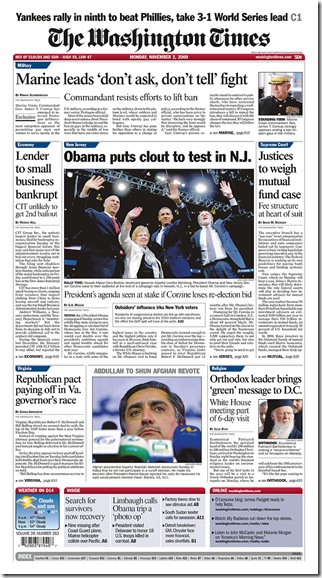
 Author: Robert Dallek
